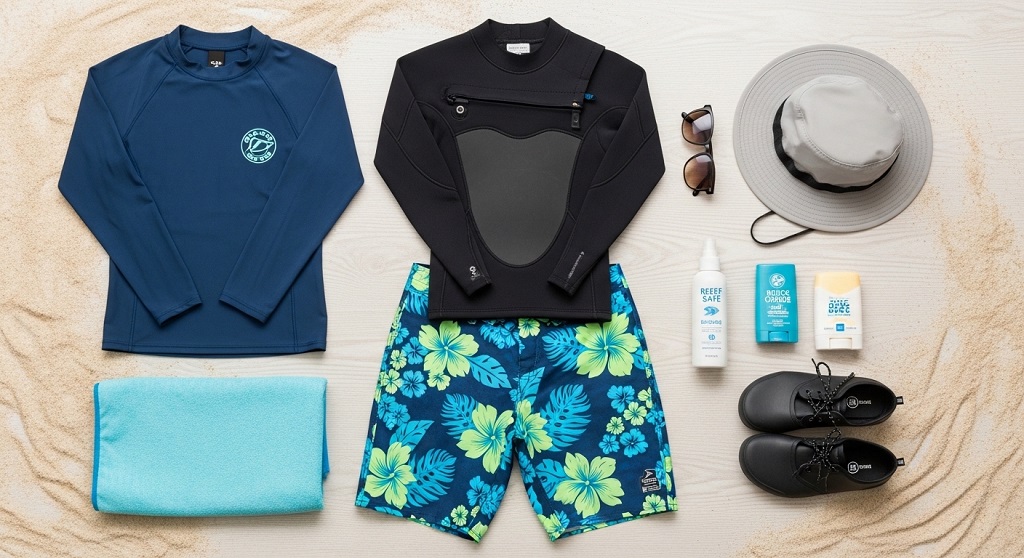
Starting your surfing journey? The right surf clothing safeguards your comfort, skin, and confidence. With the ocean’s unpredictability, beginner surfers must know exactly what to wear — and what to leave out. Discover your surf clothing essentials for beginners, and make every wave a more enjoyable ride from the start.
Snippet Answer: New surfers need an appropriate wetsuit, rash guard, board shorts or swimsuits, surf booties, and a surf hat. These essentials ensure protection from cold water, harsh sun, and irritated skin while allowing you to move freely and focus on learning the basics.
What are the absolute surf clothing essentials for beginners?
Most beginners only need a few basic clothing items: a wetsuit or swimsuit, a rash guard, comfortable board shorts, and sun protection accessories. These essentials shield your skin, regulate temperature, and boost your learning confidence.
When you’re new to surfing, the last thing you want is discomfort or a wardrobe fail in the lineup. The ocean exposes you to sunburn, chafing, and cold temperatures. Focusing on your first lessons is tough if you’re distracted by a leaky suit or stinging rashes. Starting with these surf clothing essentials for beginners can make every session safer and more enjoyable:
- Wetsuit (for cold water)
- Rash guard (prevents chafing and sunburn)
- Board shorts or swimsuit (for flexibility and comfort)
- Surf booties (protect feet on rocky reefs)
- Surf hat or cap (for sun protection)
Do you always need a wetsuit as a surf clothing essential?
Not always — it depends on the water temperature and sun exposure. Beginners in colder climates need a wetsuit, while warm-water surfers may only require board shorts, a rash guard, and sunscreen.
Wetsuits are built to insulate your body from cold water and wind-chill. In water below 68°F (20°C), a wetsuit becomes essential to prevent hypothermia and maximize your time surfing. In tropical conditions, a wetsuit can feel restrictive and even dangerous due to overheating. Instead, opt for lightweight and breathable surf clothing:
- Cold water (below 68°F/20°C): Full wetsuit (3/2mm or thicker)
- Moderate water: Shorty wetsuit or spring suit
- Warm water (above 75°F/24°C): Board shorts, swimsuit, or UV-protective rash guard
Always match your gear with the local surf conditions — ask a local surf shop for advice.
How important is a rash guard in surf clothing essentials for beginners?
A rash guard is crucial for beginners because it prevents board chafing and shields your skin from harmful UV rays, enabling longer and more comfortable surf sessions with fewer distractions or injuries.
New surfers often experience painful rashes on the stomach, chest, and underarms due to repeated board contact and salt irritation. Rash guards—tight-fitting tops made of stretchy lycra or polyester—act as a second skin. They also block up to 98% of UV rays, reducing your risk of sunburn (the number one beginner mistake!). Look for flatlock stitching and UPF (Ultraviolet Protection Factor) ratings for added protection.
What’s the difference between board shorts, swimsuits, and wetsuits?
Board shorts are loose-fitting and quick-drying for warm climates; swimsuits offer similar flexibility for women; wetsuits provide full-body warmth and protection in colder surf conditions.
The right choice depends on where and when you surf. Here’s a simple comparison:
| Clothing | Main Use | Water Temp | Protection Level | Ideal User |
|---|---|---|---|---|
| Wetsuit | Insulation, impact protection | Cold/Moderate | High (thermal, abrasion) | All surfers in cold water |
| Board Shorts | Comfort, flexibility | Warm | Moderate (surface chafe) | Men and women |
| Swimsuit | Flexibility, quick-dry | Warm | Low-Moderate | Mainly women |
| Rash Guard | Chafe & sun protection | Any | High (UV, abrasion) | All surfers |
Layering is common. Many beginners pair a rash guard underneath a wetsuit for better comfort.
Are surf booties, gloves, and hoods necessary for beginners?
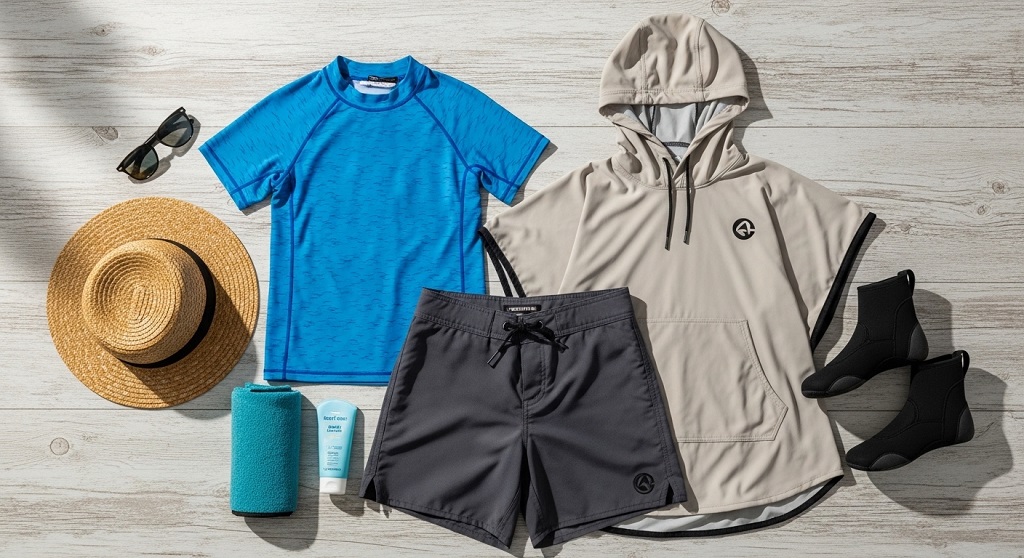
Surf booties, gloves, and hoods are optional for beginners, suggested only in very cold or rocky environments where extra thermal protection or foot safety is needed.
While these accessories might seem high-tech, they’re lifesavers in the right context. Surf booties protect your feet from rocky reefs, urchins, or cold water and provide grip on slippery boards. Gloves and hoods are mostly used in water below 60°F (16°C), where heat loss becomes the enemy. Most tropical and summer beginners can skip these, focusing on comfort and simplicity as you learn.
- Only use booties or gloves if your local break is rocky or cold.
- Make sure they fit snugly to avoid water flushing inside.
- Practice paddling and standing up with them before surfing big waves.
How should surf clothing fit for maximum comfort and performance?
Surf clothing should fit snugly without restricting movement. Baggy outfits cause drag, while clothes that are too tight restrict blood flow and flexibility, so choose a tailored but comfortable fit.
Proper fit is key to preventing board rash and staying warm in the water. For wetsuits, there should be no excess room at the wrists, ankles, or neck, but you should still be able to squat, paddle, and twist easily. Rash guards should hug your body like athletic wear, preventing them from rolling up while surfing. Board shorts should sit securely at the waist—look for tie-lock systems and quick-dry mesh linings.
Which surf clothing brands are best for beginners?
Some trusted surf clothing brands for beginners include O’Neill, Rip Curl, Billabong, Xcel, Quiksilver, and Roxy. They offer a wide variety of beginner-friendly options tailored for comfort, durability, and affordability.
Reputable brands use quality materials that resist salt and sun damage, making your investment last as you progress. Many offer beginner lines focused on comfort, strong seams, and easy sizing. Here are a few reliable picks:
- O’Neill: Global leader in wetsuits and affordable rash guards
- Rip Curl: Advanced entry-level wetsuits with signature E5 neoprene
- Billabong: Stylish and practical surfwear for all ages
- Roxy: Women-focused surf and swim apparel
Visit local surf shops for fit advice, or browse these brands online for beginner gear bundles.
What are some expert tips to look after your surf clothing as a beginner?
Always rinse your surf clothing with fresh water after each use, hang it in the shade to dry, and avoid leaving it in the sun or in your car. Store flat or on wide hangers to prevent misshaping.
Well-maintained gear lasts longer and saves you money. Simple habits prevent odors, salt stains, UV fabric breakdown, and the dreaded neoprene cracking. Here are five quick-care tips:
- Rinse all surf clothing in cool, fresh water after every surf.
- Dry in indirect sunlight—never tumble dry or hang over sharp lines.
- Use wetsuit shampoo monthly to clean and deodorize neoprene.
- Store flat or on broad-shouldered hangers to keep the shape.
- Repair small tears or rips immediately to avoid bigger problems later.
Should beginners prioritize safety or style in surf clothing essentials?
Safety should always come first for beginners choosing surf clothing essentials, but you don’t have to sacrifice style with so many modern, functional gear options now available.
It’s tempting to focus on cool patterns or bold colors. However, features like UV-blocking fabric, durable seams, snug fits, and thermal insulation allow for safer, more productive practice. Thankfully, leading brands have made it easy to look great and stay protected by offering stylish yet technically advanced beginner surf clothing. Prioritize fit and performance first, and pick a color or pattern you love last.
Comparison Table of Surf Clothing Essentials for Beginners
| Item | Purpose | When to Use | Approx. Cost ($) |
|---|---|---|---|
| Wetsuit | Warmth, buoyancy, abrasion resistance | Cold-moderate water | 80 – 250 |
| Rash Guard | Chafing and sunburn prevention | All conditions | 25 – 60 |
| Board Shorts | Comfort and flexibility | Warm water | 20 – 80 |
| Surf Booties | Foot protection | Rocky/cold breaks | 30 – 70 |
| Surf Hat | UV and sun safety | Sunny days | 20 – 40 |
Conclusion: Choosing the Right Surf Clothing Essentials for Beginners
Getting started with surfing is an exhilarating adventure. The right surf clothing essentials for beginners provide safety, warmth, and the freedom to focus on catching waves—not on irritating gear or sunburn. Regardless of where you surf, begin with the basics: a quality wetsuit or rash guard, secure board shorts or swimsuit, and reliable sun protection. Invest time in choosing quality, not quantity, and remember that well-cared-for gear can last for years. Ready to ride your first wave in style and comfort? Visit your local surf shop or trusted online store, and pick up your starter kit today!
Frequently Asked Questions About Surf Clothing Essentials for Beginners
What should a beginner wear to their first surf lesson?
A beginner should wear a wetsuit or rash guard (depending on water temperature), board shorts or a secure swimsuit, and plenty of sunscreen. Optional items include a surf hat for sun protection and booties if the beach is rocky.
Can you surf in a regular swimsuit?
Yes, in warm water, you can surf in a snug, athletic swimsuit—but rash guards or board shorts provide extra comfort and protection against chafing and sunburn.
How tight should my wetsuit or rash guard be?
Both should be snug but not restrictive. For wetsuits, there should be no extra material around joints or at the neck; for rash guards, you should feel a slight compression similar to sportswear.
How do I choose the right wetsuit thickness?
Match wetsuit thickness to water temperature: 3/2mm for most temperate climates; 4/3mm or thicker for colder water. Spring suits are good for mild conditions; shorties work for summer.
Is it necessary to buy branded surf clothing to start?
Not strictly, but quality matters. Top brands invest in better materials and construction, making your gear last longer and perform better, but there are affordable and lesser-known brands that also offer solid beginner options.
How do I clean and dry my surf clothing properly?
Rinse all gear in cold, fresh water after use. Hang wetsuits and rash guards in the shade (not direct sun) using wide hangers, and avoid crumpling them in your car.
Are there any surf clothing essentials specific to women?
Women should ensure they choose secure, surfing-specific swimsuits or board shorts to avoid wardrobe malfunctions. Many brands offer rash guards and wetsuits tailored for women’s fits, comfort, and style.
Read More Also: How to Find the Best Fishing Combos Under $100 in 2026