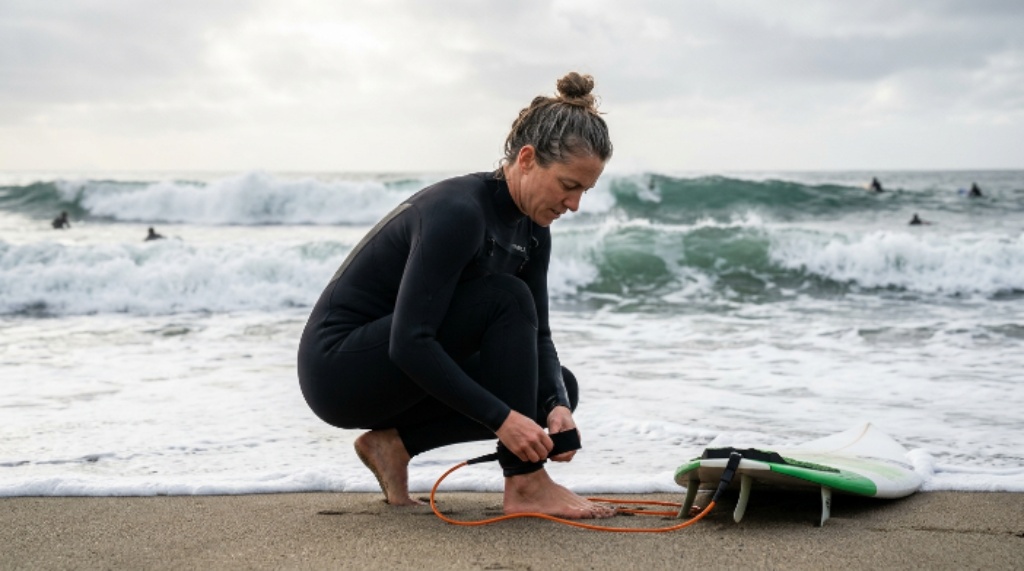
Surfing is one of the most exciting sports in the world. But like any water sport, it comes with real risks. One of the simplest ways to stay safe in the ocean is to use the right surfboard leash. A leash keeps your board close after a wipeout. It also protects other surfers nearby. However, not all leashes are the same. Choosing the right one can make a big difference in how you surf and how safe you are.
This guide will walk you through everything you need to know. You will learn about the different leash types, how to match a leash to your surfboard, and what features matter most for surf safety gear.
Why Your Surfboard Leash Matters More Than You Think
Many beginner surfers focus on choosing the right board or wetsuit. However, the leash often gets overlooked. This is a mistake. A leash is a critical piece of surf safety gear. Without it, a loose board can travel far and fast in strong waves. It can strike other swimmers or surfers. In rough conditions, a lost board can even leave you stranded far from shore.
Therefore, picking the right leash is not just about performance. It is also about protecting yourself and everyone around you.
Understanding the Different Leash Types
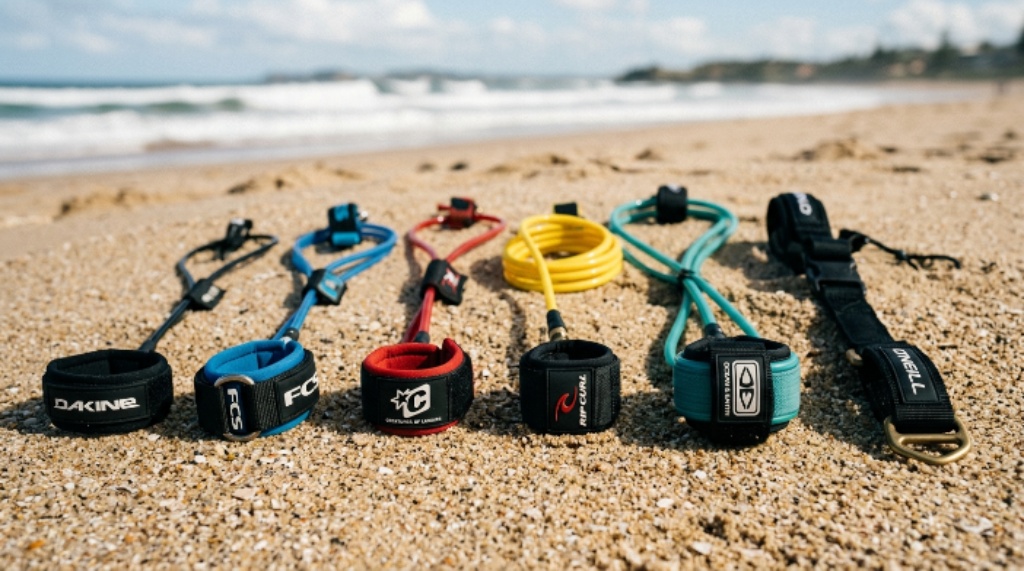
There are several leash types available on the market today. Each one is designed for a specific style of surfing or a particular wave condition. Understanding each type helps you make a smart choice.
Straight Leashes
The straight leash is the most common type. It runs in a single cord from your ankle to the tail of your board. It is simple, reliable, and works well in most wave conditions. Beginners and recreational surfers often prefer this style. Additionally, straight leashes are easy to find and are available in a wide range of lengths and thicknesses.
Coiled Leashes
Coiled leashes look like a telephone cord. They stretch out when tension is applied and return to a compact shape when relaxed. Surfers who use stand-up paddleboards (SUP) often choose coiled leashes. They work especially well in flat or light-wave conditions. Because the cord stays out of the water most of the time, it creates less drag. However, they are not the best choice for heavy surf, where a quick snap-back can be uncomfortable.
Competition Leashes
Competition leashes are thinner and lighter than standard models. They are designed to create as little resistance as possible while you surf. Professional and advanced surfers often use them in smaller, cleaner waves. The trade-off is that they are less durable. Therefore, they are not ideal for everyday use or rough conditions.
Big Wave Leashes
Big wave leashes are thick, long, and built tough. They are made for surfers tackling powerful, overhead-high waves. These leashes must withstand enormous force without snapping. Some big wave leashes also have a quick-release mechanism. This allows the surfer to detach the leash quickly if it becomes tangled in rocks or reef. Safety is the top priority with this leash type.
Knee and Calf Leashes
Most leashes attach to the ankle. However, some surfers prefer calf or knee attachments. These give a slightly different feel and are popular among longboarders. They keep the cord higher on the leg, which can reduce tangling when walking the board. Additionally, they tend to stay out of the way during footwork-heavy surfing.
How to Choose the Right Leash Length
Length is one of the most important factors when selecting a leash. As a general rule, your leash should be as long as your surfboard, or slightly longer.
- Shortboarders typically use leashes between 6 and 7 feet long.
- Midlength and funboard riders often go with 8 to 9 feet.
- Longboarders usually need leashes of 9 to 10 feet or more.
A leash that is too short will cause your board to rebound back toward you too quickly after a wipeout. This can be dangerous. On the other hand, a leash that is too long may drag in the water and slow you down. Therefore, matching your leash length to your board is key.
Thickness and Its Role in Durability
Leash thickness is measured in millimeters. Thicker leashes are stronger but create more drag. Thinner leashes are lighter but may not hold up in heavy surf.
Here is a simple breakdown:
- 5 mm to 6 mm: Suitable for small to medium waves and everyday surfing.
- 7 mm: Good for overhead surf and more powerful conditions.
- 8 mm and above: Designed for big wave surfing and serious conditions.
Additionally, the thickness of the swivel joint and the cuff stitching matters. Always check that the construction is solid before buying.
The Cuff and Swivel: Small Details That Make a Big Difference
The cuff is the part of the leash that wraps around your ankle. It should be padded, comfortable, and secure. A poorly made cuff can cause chafing or come loose at the worst moment. Look for double-wrap Velcro closures and neoprene padding.
The swivel is the small rotating joint that connects the cord to the cuff and the rail saver. A good swivel prevents the leash from tangling as you move. Some leashes include swivels at both ends. This feature is especially useful in active surfing where the board rotates frequently.
The rail saver is the wider section of cord that attaches to the board. It protects the tail of your surfboard from damage. Without a good rail saver, a thin cord can cut into the board over time.
Matching Your Leash to Your Surfing Conditions
Choosing the right leash also means considering where and how you surf.
Surfing small, gentle waves at a crowded beach calls for a standard straight leash. This keeps things safe and simple. However, if you surf reef breaks or remote spots, a slightly thicker and stronger leash is a better choice.
For river surfing or surfing near rocks, a quick-release leash can be a lifesaver. These allow you to detach instantly if the leash gets caught on something beneath the water’s surface.
Additionally, if you travel and surf in different locations, consider keeping two leashes on hand. One for small conditions and one for bigger days. This flexibility gives you the right tool for each session.
Caring for Your Leash
Even the best leash will wear out over time. Regular care can extend its life and keep you safer in the water.
- Rinse your leash with fresh water after every session.
- Check the cord for kinks, fraying, or weak spots regularly.
- Inspect the swivel for rust or stiffness.
- Replace your leash at least once a year, or sooner if you surf often.
A worn-out leash can snap at the worst possible moment. Therefore, keeping your leash in good condition is just as important as choosing the right one in the first place.
Conclusion
Choosing the right surfboard leash is a simple step that has a big impact on your safety and performance in the water. Start by understanding the different leash types available, from standard straight leashes to heavy-duty big wave options. Then, match the length and thickness to your board size and the waves you typically surf. Pay attention to the quality of the cuff, swivel, and rail saver. Finally, take care of your leash so it lasts longer and keeps you safer.
The ocean is unpredictable. Having the right surf safety gear, including a proper leash, gives you one less thing to worry about. So choose wisely, surf confidently, and always respect the sea.
Frequently Asked Questions
- How long should a surfboard leash be? Your leash should be roughly the same length as your surfboard, or slightly longer. For example, a 7-foot board works best with a 7-foot leash. This ensures the board does not snap back too quickly after a fall.
- Can I use the same leash for different surfboards? It depends on the length and thickness. A leash matched to a shortboard may not be appropriate for a longboard. It is better to have a leash matched specifically to each board you use regularly.
- How often should I replace my surfboard leash? Replace your leash at least once a year if you surf frequently. However, if you notice fraying, kinks, or any damage to the cord or swivel, replace it right away. A broken leash in strong surf can be very dangerous.
- Are coiled leashes good for ocean surfing? Coiled leashes work best for flat water and SUP surfing. In strong ocean waves, a coiled leash can snap back hard after tension is released, which can be uncomfortable or even painful. A straight leash is usually the better choice for ocean surfing.
- What is a quick-release leash and who needs one? A quick-release leash has a mechanism that allows the surfer to detach it instantly. This is useful when surfing near rocks, reef, or in rivers where a leash could get snagged. Big wave surfers also use them for added safety in extreme conditions.
Related Topics:
Choosing Your First Skateboard? Why WhiteFang 31 Should Be On Your List
How to Learn To Swim Yourself: 5 Recommendations for Adults and Children