Every golfer has been there. You watch your ball drop onto the green, take one hop, and leave a small crater in the turf. That dent is called a ball mark, and if left unrepaired, it damages the green for hours and frustrates every golfer who putts over it afterward.
Repairing your ball marks is one of the most important acts of courtesy on a golf course. It is also one of the simplest. All you need is a good divot tool and about ten seconds of effort. However, not all divot tools are created equal. The right one fits comfortably in your hand, repairs marks cleanly, and lasts for years.
This guide covers everything you need to know about choosing the best golf divot tools in 2026, whether you are just starting out or have been playing for decades.
Why Repairing Ball Marks Matters More Than You Think
A ball mark that goes unrepaired takes weeks to heal on its own. One that is fixed properly within minutes recovers within 24 hours. That difference matters enormously for the quality of the putting surface every golfer shares.
Greens are the most labor-intensive and expensive part of any golf course to maintain. Greenkeepers spend significant time and resources keeping them smooth, fast, and healthy. When golfers repair their own ball marks, they actively support that effort. Additionally, you are likely to putt on greens where others have already played, so the courtesy you extend benefits your own round too.
Beyond etiquette, properly repaired greens simply play better. Fewer bumps and irregularities mean more predictable putts and a fairer game for everyone. Therefore, carrying a quality golf green repair tool is not optional. It is a basic responsibility every golfer should take seriously.
What Makes a Great Divot Tool
Before looking at specific options, it helps to understand what separates a genuinely useful divot tool from a cheap one that sits forgotten at the bottom of your bag.
Prong Design and Functionality
Most divot tools have two prongs that you insert around the edge of a ball mark. The correct technique involves pushing the prongs inward from the edges toward the center, then smoothing the surface with your putter. Tools with angled prongs are easier to insert at the correct angle, which reduces the chance of tearing grass roots.
Some tools feature a single-prong design or a switchblade-style mechanism. These compact options are popular because they are easier to carry and store. However, they require a slightly different technique, and some golfers find them less intuitive at first.
Materials and Build Quality
Divot tools come in plastic, zinc alloy, stainless steel, and brass. Plastic tools are the cheapest and most common in promotional giveaways. They work, but they bend and break with regular use. Metal tools are far more durable and maintain their shape through thousands of uses.
Zinc alloy and stainless steel strike the best balance between weight and durability. Brass tools are heavier but feel premium in the hand and develop a pleasing patina over time. For anyone looking at golf course essentials that stand the test of time, a metal divot tool is the only sensible investment.
Ergonomics and Grip
A divot tool you will actually use is one that feels comfortable in your hand. Look for a shape that sits naturally between your fingers and has some texture or grip on the surface. Smooth metal tools can slip when your hands are wet. Tools with a rubberized grip, textured pattern, or contoured handle are much easier to use consistently.
Size is also worth considering. A tool that is too small is fiddly to use with gloves on. One that is too large takes up unnecessary pocket space. Most quality tools fall between eight and twelve centimeters in length, which suits most hand sizes.
Magnetic Ball Marker Attachment
Many modern divot tools include a built-in magnetic ball marker. This is a genuinely useful addition. Ball markers are small and easy to lose, so having one securely attached to your divot tool means you always have both within reach. The magnet keeps the marker firmly in place until you need it, then releases it cleanly with a simple pull.
Types of Divot Tools and Who They Suit
There is no single best divot tool for every golfer. Different designs suit different preferences, playing styles, and budgets.
Classic Two-Prong Tools
The two-prong tool is the most widely used design on the planet. It is simple, effective, and easy to master. Beginners benefit most from this style because the technique is straightforward to learn. You push the prongs in, work around the mark in a circular motion, and smooth the surface flat.
Classic two-prong tools are available at every price point. Budget versions cost just a few dollars and work well enough. Higher-end versions include ergonomic handles, magnetic markers, and premium finishes that make them a pleasure to carry.
Switchblade and Folding Tools
Switchblade divot tools open with a button press, similar to a pocket knife. The prong or blade folds away when not in use, making the tool safe to carry in your pocket without risking a scratch. These are popular with golfers who prefer a minimalist approach to their kit.
The folding mechanism does add a point of potential failure over time. However, high-quality versions are built to withstand years of daily use without issues. They tend to be slightly more expensive than standard tools but are worth the investment for their convenience.
Multi-Function Tools
Some divot tools combine several functions into one compact device. Common additions include a groove cleaner, a club face scraper, and a bottle opener. These multi-function tools appeal to golfers who like to minimize the number of items in their bag.
However, it is worth being selective here. A divot tool that tries to do too many things sometimes does none of them particularly well. Focus on the repair function first, and treat any extras as a bonus rather than a selling point.
Personalized and Custom Tools
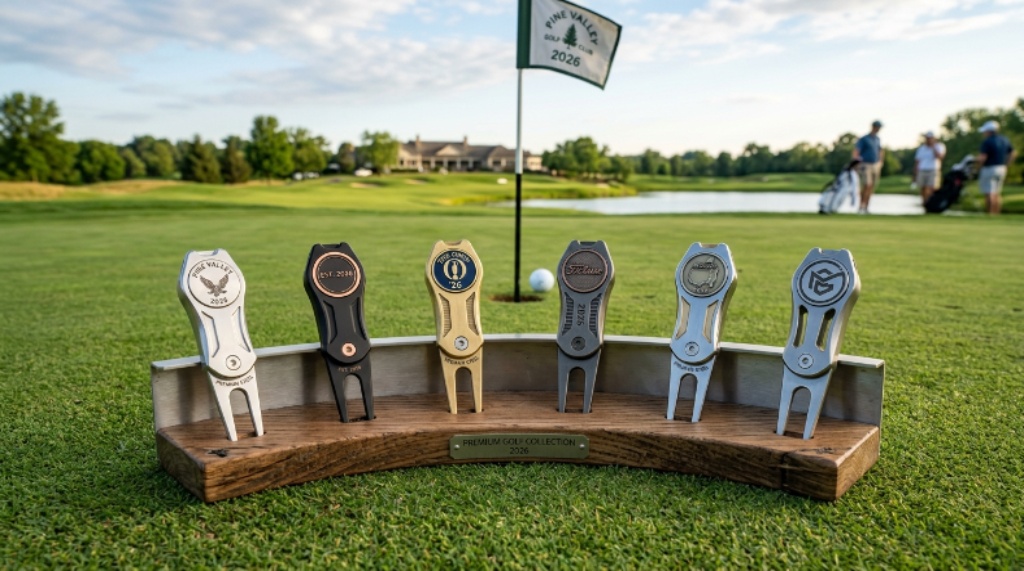
Custom divot tools make popular gifts and are widely available from golf retailers and online suppliers. You can have them engraved with a name, initials, or logo. Many golf clubs and corporate events use personalized tools as branded keepsakes.
Quality varies significantly across custom options, so pay attention to the base material. A personalized tool made from stainless steel or brass will last. One made from thin zinc or plastic may look attractive but will not hold up well on the course.
What to Look for in 2026 Specifically
The divot tool market has grown more competitive in recent years. In 2026, several trends are worth noting when making your purchase.
Sustainable materials are becoming more common. Some brands now offer tools made from recycled metals or responsibly sourced materials, appealing to environmentally conscious golfers. These options perform just as well as conventional tools and carry no meaningful trade-off in quality.
Slim, minimalist designs are also gaining popularity. As golfers become more particular about what they carry, compact tools that slip into a watch pocket or clip onto a bag with ease are in high demand. Additionally, premium golf accessories now increasingly feature refined finishes like matte black, brushed silver, or rose gold, which appeal to golfers who care about the look of their gear as much as its function.
Wireless charging integration is beginning to appear in high-end multi-function tools, though this remains a novelty for most golfers. For the vast majority, a well-built, ergonomic metal tool with a magnetic marker remains the smartest choice in any year.
How to Use a Divot Tool Correctly
Owning a quality tool only helps if you use it properly. Many golfers repair ball marks incorrectly without realizing it, which can actually slow the healing process.
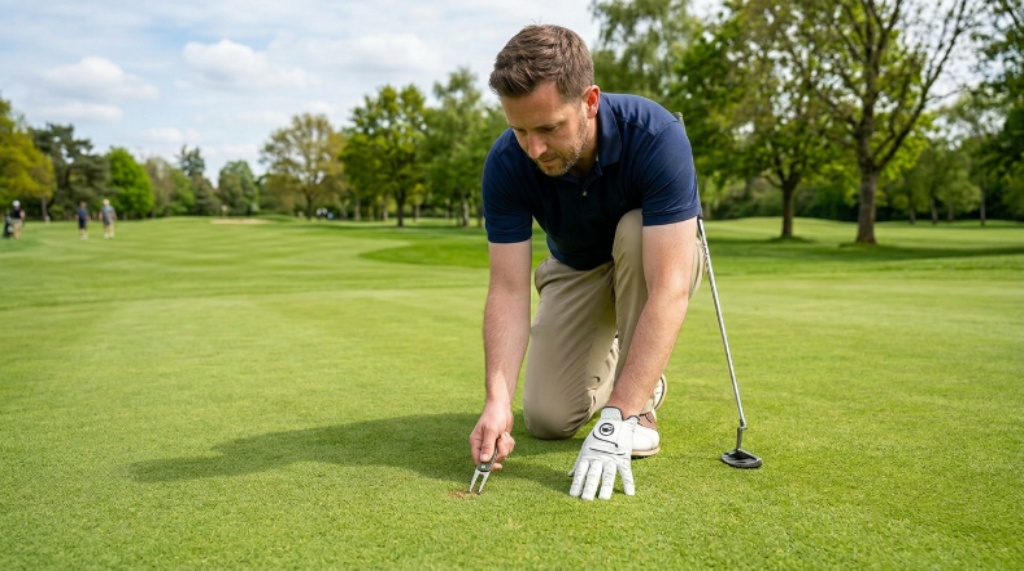
The most common mistake is pushing the prongs upward from underneath the center of the mark, as if lifting a plug of turf. This tears the grass roots and leaves the surface uneven. Instead, insert the prongs at the outer edge of the mark and push inward at a low angle. Work around the mark from all sides, gently nudging the turf toward the center. Then smooth the surface flat with the sole of your putter.
This technique preserves the root structure beneath the surface and allows the turf to recover much faster. It takes no longer than ten seconds and makes a significant difference to the quality of the green.
Conclusion
A divot tool is one of the most overlooked yet most important items any golfer can carry. Choosing the right one comes down to build quality, comfort, and the features that suit your routine on the course. Metal tools outperform plastic every time. A magnetic ball marker adds genuine convenience. Ergonomics matter more than most people expect.
Whether you are a beginner learning course etiquette for the first time or an experienced player looking to upgrade your premium golf accessories, a well-made golf green repair tool is a small investment that pays dividends every round. It keeps greens in better condition, shows respect for fellow players, and is simply the right thing to do. In 2026, there has never been a better selection of quality options available at every price point. Use this guide to find the one that fits your game and your values.
Frequently Asked Questions
What is the correct way to repair a ball mark on a green?
Insert the prongs of your divot tool at the outer edge of the mark at a low angle. Push inward from all sides toward the center without lifting the turf. Then smooth the surface flat with your putter. This preserves the grass roots and speeds up recovery significantly.
How much should I spend on a divot tool?
You can find a functional metal divot tool for under $15. Better-quality options with magnetic markers, ergonomic grips, and premium finishes range from $20 to $50. Personalized or collector-style tools can cost more. For most golfers, spending $15 to $30 secures a tool that will last for many years.
Are switchblade divot tools better than standard two-prong tools?
Neither is objectively better. Switchblade tools are more compact and pocket-friendly. Standard two-prong tools are simpler and easier for beginners to use. The best choice is the one you feel comfortable using consistently on every round.
Can I use a tee to repair a ball mark instead of a divot tool?
Yes, in a pinch. However, a tee is less effective because it does not give you the same leverage or the ability to work around the edges of the mark. A proper divot tool does the job more cleanly and causes less damage to the surrounding turf.
Should beginners carry a divot tool from their very first round?
Absolutely. Repairing ball marks is a fundamental part of golf etiquette that every player is expected to follow from day one. It is a simple habit to build early, and having a quality tool in your pocket makes it easy to do without thinkin.