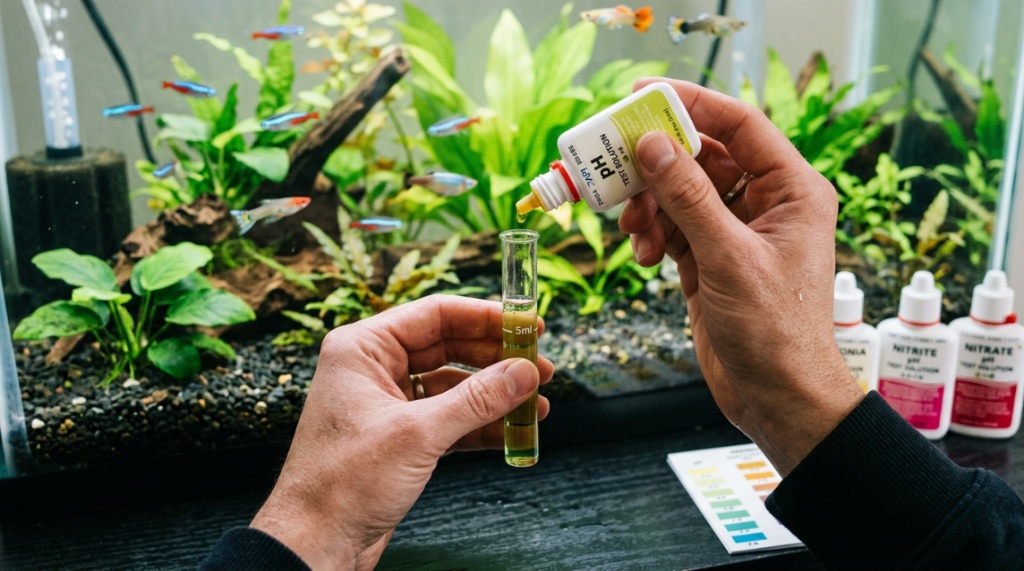
Living in Florida means dealing with heat, humidity, and water that feels more like liquid rock than life support. You’ve set up your tank, added fish, and then watched helplessly as algae exploded or fish gasped at the surface. The problem isn’t your effort—it’s that Florida’s unique water chemistry and subtropical climate demand a different approach to stability. Achieving a truly aquarium water balanced Florida environment requires understanding how local tap water, warm room temperatures, and seasonal storms affect your tank. This guide walks you through the exact steps to create a stable, thriving aquatic ecosystem despite the Sunshine State’s challenges.
Why Is Florida Tap Water So Hard to Stabilize?
Florida’s groundwater filters through limestone, which dissolves calcium and magnesium carbonate. This makes the water naturally very hard and alkaline. Most municipal systems also add chloramine, which doesn’t evaporate like chlorine. You’re not just fighting pH swings—you’re dealing with a high buffering capacity that resists your efforts to lower acidity.
The High KH and GH Problem
Carbonate hardness (KH) often exceeds 200 ppm, while general hardness (GH) can hit 300 ppm. This means your pH will stubbornly stay around 8.0–8.4. South American or Asian fish like tetras, discus, and rasboras suffer in these conditions. Instead of chasing a lower pH with chemicals, focus on *consistency*. Stable hard water is healthier than fluctuating “ideal” water.
Chloramine vs. Chlorine
Standard dechlorinators neutralize both, but many hobbyists use cheaper drops that only handle chlorine. Ammonia is released when chloramine breaks down. If your water conditioner doesn’t bind ammonia, you’re feeding a silent cycle crash. Always use a conditioner labeled “removes chloramine and detoxifies ammonia.”
The Seasonal Tannin Factor
Florida’s rainy season flushes organic matter into reservoirs, causing seasonal shifts in pH and dissolved organics. Test your tap water monthly. You might need to adjust your water change schedule after heavy rainstorms.
What Is the Ideal pH Range for Florida Aquarium Water?
Don’t force a pH below 7.0 in a freshwater tank. Instead, target a stable pH between 7.6 and 8.0 for community fish. This range works with your local water, not against it. For sensitive species, use remineralized RO water or rely on natural buffers like crushed coral.
Matching Fish to Your Water Chemistry
Choose livebearers (guppies, mollies), African cichlids, or brackish species that thrive in hard, alkaline water. If you must keep discus or altum angelfish, plan for an RO/DI system from day one. Adapting fish from store water to a different pH in Florida is a recipe for stress.
Using pH Buffers Safely
Chemical pH adjusters cause sudden swings. Instead, use natural methods: driftwood, almond leaves, or peat moss will slowly lower pH. Monitor daily. Even buffering agents like Seachem Neutral Regulator need careful dosing to avoid precipitation events.
The Foolproof Test for KH Stability
Test your KH weekly. If KH is above 120 ppm, you have enough buffering capacity to prevent dangerous pH crashes. The goal is not a specific number, but avoiding a swing greater than 0.2 units per day.
How Do Florida’s Summer Heat Waves Affect Your Aquarium?
Summer heat pushes tank water into the high 80s (°F) without a heater. Warm water holds less dissolved oxygen, accelerating fish metabolism and waste production. Your bacteria colony also multiplies faster, leading to rapid ammonia spikes after feeding. The heat turns your tank into a biological pressure cooker,When securing your hardscape before filling the tank, remember to use cyanoacrylate glue for aquarium decor to ensure everything stays firmly in place.
Signs of Oxygen Deprivation
Fish gasping at the surface, rapid gill movement, or lethargy are red flags. Improve surface agitation with a wave maker or air stone. Increase surface area by lowering the water level slightly. A programmable powerhead can create gentle ripples without stressing fish.
When to Adjust Your Heater Settings
Set your heater to a specific temperature (e.g., 78°F) and let it fight the heat. This keeps conditions stable. If ambient room temperature exceeds 85°F, consider evaporative cooling with a fan. Point a small clip-on fan across the water surface to lower temp by 3–5 degrees.
Use a Backup Cooling Strategy
Frozen water bottles work in an emergency but cause localized cold spots. Instead, freeze gel packs in a filter bag. Alternating frozen packs every 4 hours maintains a gradual drop. Never drop tank temperature more than 2°F per hour.
Can You Use Florida Tap Water for a Planted Aquarium?
Yes, but with strict adjustments. Planted tanks demand nutrients that hard water with high pH makes less bioavailable. Iron, potassium, and magnesium become locked out above pH 7.8. You’ll need to supplement heavily or consider CO2 injection to moderate pH swings.
Choosing Plants That Tolerate Hard Water
Opt for Anubias, Java fern, Vallisneria, and Cryptocoryne species. These adapt to high GH without melting. Avoid most carpeting plants—they require CO2 and soft, acidic water to thrive. Use root tabs instead of liquid fertilizers for better uptake.
The Role of CO2 in pH Stabilization
Pressurized CO2 systems create carbonic acid, lowering pH naturally. In Florida’s hard water, a CO2 controller maintains a stable pH throughout the day, preventing the afternoon algae spike when photosynthesis peaks. Start at 1 bubble per second for a 20-gallon tank, measure pH, then adjust.
Why You Avoid Liquid Carbon in Hard Water
Glutaraldehyde (Excel) can cause fish stress in warm, hard water. It also decomposes faster at high temperatures, making dosing unpredictable. Stick to biological CO2 methods if you’re on a budget.
Which Filtration System Handles Florida’s High Mineral Content?
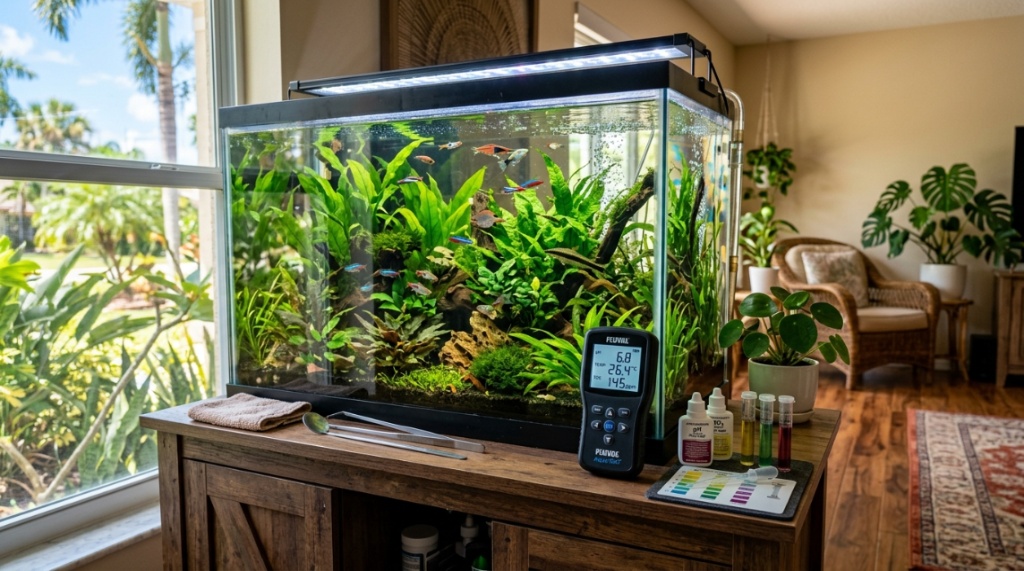
Canister filters with mechanical media, biological rings, and chemical media like Purigen outperform hang-on-back filters in hard water. They offer more media volume and precise flow control. The key is clogging prevention—hard water precipitates calcium on filter media, reducing flow within weeks.
Prefilter Sponge Maintenance Schedule
Rinse your prefilter sponge every 3 days during summer. This traps abrasive particles before they damage impellers. Soak the sponge in a bucket of tank water mixed with a dash of white vinegar to dissolve mineral buildup.
Chemical Media: Resin or Activated Carbon?
Use mixed-bed ion exchange resins to remove heavy metals, but change them monthly. Activated carbon doesn’t remove hardness; it just removes tannins and odors. Use Purigen instead—it resets hardness and keeps water crystal clear without stripping trace elements.
Backwashing Your Canister Filter
Once a month, open the filter and rinse your biological media in a bucket of old tank water. Never use tap water, as chlorine kills the bacteria bed. Clean the impeller with a toothbrush to prevent heat damage.
How Often Should You Do Water Changes in Florida?
In Florida, the heat and evaporation concentrate minerals daily. Standard 25% weekly water changes aren’t enough. Start with 30% twice a week during the hottest months. This dilutes accumulating salts and removes metabolic waste faster than your filter can process.
Calculate Water Change Volume
For a 40-gallon tank, perform a 12-gallon change every Tuesday and Friday. Use a Python siphon for accuracy. Always match new water temperature to tank temp within ±2°F. Let the water run through a prefilter to remove any sediment from pipes.
The Evaporation Conundrum
High humidity makes evaporation slower, but Florida’s summer sunlight still causes 2–3 gallons per week. Do NOT top off with tap water—you’ll add more minerals. Use RO water or distilled water for topping off, and leave the water changes for mineral removal.
Use a TDS Meter as a Guide
Total Dissolved Solids (TDS) below 400 ppm is ideal. If your tap water is 400 ppm, a weekly 30% water change will keep tank TDS around 350. Test TDS before and after water changes to track dilution efficiency.
What Is the Best Way to Deal with Algae in Hard Water?
Algae thrives in high-light, high-nutrient, and hard water conditions. The most effective solution is not reducing light, but balancing nutrients and algae grazers. Florida sunlight through windows can fuel hair algae blooms that are almost impossible to remove chemically.
Introducing Siamese Algae Eaters or Amano Shrimp
These creatures love hard water. Amano shrimp consume hair algae and leftover food, while Otocinclus catfish clean glass. However, add them only after your tank is mature (8+ weeks). They are sensitive to ammonia spikes.
Manage Your Lighting Duration
Limit light to 6–7 hours per day and use a timer. Position the tank away from direct sunlight. Use a dimmer to simulate dawn/dusk. Algae is a plant—without consistent photoperiods, it can’t dominate.
The Phosphate Trap
Hard water often has high phosphates. Use PhosGuard in your filter, but change it weekly. Also, rinse frozen food before feeding to remove phosphate-rich juices. Vacuum the substrate deeply to remove organic debris.
Which Fish and Invertebrates Thrive in Florida Aquarium Water?
Not all fish can handle Florida’s high pH and hardness. Choose species from rift lakes, brackish estuaries, or Caribbean reefs. This ensures low stress and high survival rates. Below is a comparison of ideal community residents.
| Species | pH Range | Hardness (GH) | Temperature |
|---|---|---|---|
| Molly fish | 7.5–8.2 | 20–30 dGH | 75–82°F |
| Platy fish | 7.0–8.2 | 10–25 dGH | 70–78°F |
| Ramshorn snails | 7.0–8.4 | 5–25 dGH | 70–78°F |
| Neolamprologus cichlids | 8.0–9.0 | 15–25 dGH | 75–82°F |
Breeding Potential in Hard Water
Livebearers breed readily in high GH—it triggers their natural reproductive cycle. However, provide spawning mops or dense plants for fry survival. Remove adults after birth to prevent predation.
Invertebrates: Shrimp and Crabs
Neocaridina shrimp prefer softer water but tolerate up to 20 dGH if acclimated slowly. For real hardiness, try the Florida native crayfish or brackish-tolerant nerite snails, which crack open algae with their radula.
Is a Chiller Necessary for Florida Aquariums?
Only if you keep cold-water fish like goldfish or certain Shrimp species that demand under 70°F. For tropical fish, a fan or AC in the room may suffice. A chiller is a solution for maintaining precision, not a default purchase.
Fan-Based Evaporative Cooling
Place a clip-on fan blowing across the water surface. This increases evaporation and can drop temp by 5°F in dry conditions. However, monitor water level—you’ll refill more often. In Florida’s humid afternoons, fan efficiency drops by 50%.
Air Conditioning and Room Placement
Mount the tank in a cool, shaded part of the house, away from kitchen heat. An air conditioner controlling ambient room to 75°F will keep your tank at 78°F without a chiller. Don’t place the tank near a TV or receiver that emits heat.
How Do You Prevent pH Crashes During Florida Thunderstorms?
Barometric pressure drops and organic runoff cause tap water pH to fluctuate dramatically after storms. This is the most dangerous time for your fish. To avoid a crash, maintain a buffer reservoir using a spare bucket filled with prepared water, ready for emergency changes.
The Emergency Water Bucket Strategy
Keep a 5-gallon bucket with a powerhead and heater set to tank temp. Fill it with tap water, treat it with dechlorinator, and let it circulate for 24 hours. This allows pH to stabilize before use. You can just swap 20% of water without waiting.
Monitoring During Rain Events
If rain is forecast, test your tap water pH before doing any water change. If it’s below 7.2, wait 48 hours. Use a dechlorinator that also buffers alkalinity. Seachem Safe works well for this.
What Supplements or Additives Actually Work for Florida Water?
The market is full of “adjusters” that promise perfection. In reality, you need only three additives: a quality dechlorinator, a biological booster, and trace element replenisher. Avoid pH down products—they cause more harm than good.
The Misguided pH Down Fix
Products like pH Down add acids that temporarily lower pH, but the KH immediately buffers it back up. This oscillation stresses fish and clouds water. Instead, use peat granules in your filter to slowly release tannins, which are natural acids.
Essential Mineral Replenishment
Hard water leaches potassium and iodine over time. Use a balanced fertilizer like Seachem Equilibrium for planted tanks. For fish-only tanks, a drop of iodine supplement promotes healthy thyroid function.
The Role of Liverock or Coral Base
African cichlid keepers benefit from adding crushed coral to their substrate or filter. This slowly dissolves, replenishing calcium and magnesium while keeping pH stable. Replace a handful every few months.
How to Set Up a Budget-Friendly RO/DI System
An RO/DI unit is the ultimate solution for Florida’s extreme hardness. For under $100, you can buy a 4-stage unit that removes 99% of dissolved solids. Connect it to a float valve in a Brute trash can to create an automated water production station.
Mixing RO with Tap for Optimal Values
Don’t go full RO—you’ll strip all minerals. Instead, mix 50% RO with 50% tap water. This yields a balanced GH of 150–200 ppm and KH of 100–120 ppm. This is perfect for community fish and plants. Buy a small TDS meter to calibrate your mix ratio.
Maintaining Your RO Membrane in Florida Heat
Replace the sediment filter every 3 months and the carbon block every 6 months. In warm climates, bacteria can grow inside storage reservoirs. Sanitize the unit with a mild bleach solution quarterly. Your membrane should last 2 years.
Storing RO Water Safely
Use a food-grade plastic container with a lid. Add an air stone to circulate water and keep it oxygenated. Stored RO water can go stale after 7 days, so produce small batches weekly. Label with the date.
Frequently Asked Questions
How do I lower pH in my aquarium in Florida?
Stop trying to lower pH with chemicals. Use driftwood or catappa leaves to release tannins gradually. For a significant drop, use an RO/DI system to dilute hardness. However, achieving a pH below 7.5 is challenging with hard water; focus on maintaining stability.
Can I use well water in my Florida aquarium?
Yes, but well water can contain iron, sulfur, or methane. Test for nitrates and pH first. Aerate well water for 24 hours to remove gases like carbon dioxide or hydrogen sulfide. Never mix well water with municipal water without checking for phosphate levels.
Why does my aquarium water turn cloudy after a water change in Florida?
Cloudiness often results from bacteria blooms triggered by changing water chemistry. When you add tap water with different KH, it causes a precipitate. Let the filter run for 24 hours, and don’t feed fish for a day. If it persists, check ammonia levels—your biological filter may need help.
Is a UV sterilizer useful for hard water algae?
Yes, a UV sterilizer clears water of floating algae spores and bacteria. However, it doesn’t remove algae attached to glass. Use it alongside cleaning routines. It’s most effective for controlling green water outbreaks.
How often should I test my water in a new Florida setup?
Test every day for the first month. Measure pH, ammonia, nitrite, and KH. After cycling, reduce to weekly tests. During summer heat waves or after storms, increase testing frequency to catch changes early.
Keeping your aquarium thriving in Florida isn’t about fighting your local water—it’s about understanding and working with it. By focusing on consistency, selecting compatible species, and implementing smart cooling and filtration strategies, you’ll achieve an aquarium water balanced Florida environment that’s beautiful and low-stress for both you and your fish. Remember: a stable tank beats a “perfect” tank every time. Start by testing your tap water today, then adjust your routine gradually. Your fish will show their appreciation through vibrant colors and active behavior. Now, take that first step—check your water parameters and make one improvement this week.