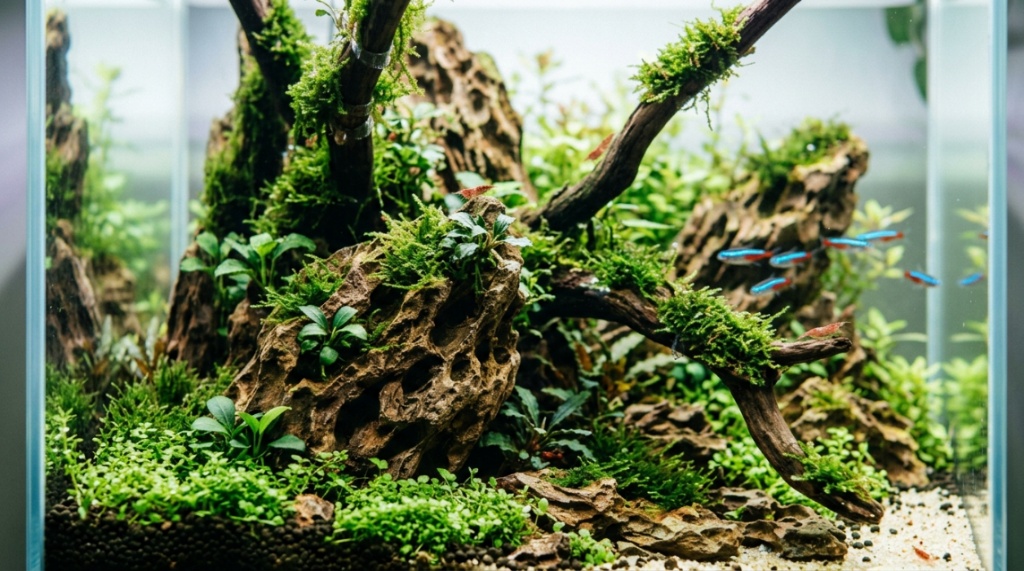
You’ve just spent hours designing the perfect aquascape only to watch your carefully placed rocks tumble into the substrate. Or maybe your driftwood refuses to sink, and your moss keeps floating away. The frustration is real. The solution is surprisingly simple: cyanoacrylate glue for aquarium decor. This fast-acting adhesive bonds almost instantly underwater and is completely safe for fish and plants when used correctly. Whether you are a beginner or a seasoned aquascaper, understanding how to use this glue properly transforms your aquarium building experience from a battle into a joy.
What Exactly Is Cyanoacrylate Glue and Why Is It Safe for Aquariums?
Cyanoacrylate glue is the technical name for super glue. However, not all super glues are aquarium-safe. The key is choosing the right type.
Understanding the Chemistry Behind the Glue
Cyanoacrylate monomers polymerize rapidly when they come into contact with water or moisture. This is exactly why it works so well in a wet environment like an aquarium. The glue forms a hard, durable plastic bond that is inert once fully cured. This means it will not leach toxins into your water column after it sets.
Identifying Aquarium-Safe Formulas
Look for pure cyanoacrylate gel or liquid with no additives. Avoid glues labeled as “gel control,” “brush-on,” or “professional strength” that contain accelerants, rubber, or solvents. These chemicals can harm your fish. The best choice is a single-ingredient product, often sold as “super glue gel” in a tube. A reliable source for safe options is cyanoacrylate glue for aquarium decor.
Distinguishing Between Gel and Liquid Formulas
Gel is almost always preferable for aquarium work. It is thicker, less runny, and allows you to position items without the glue dripping everywhere. Liquid cyanoacrylate works for flat surfaces but is much harder to control underwater. Gel also fills small gaps between porous materials like wood and stone, creating a stronger bond.
Which Materials Can You Bond With Cyanoacrylate Glue?
Not every material bonds equally well. Knowing what sticks helps you plan your build without surprises.
Porous Materials That Bond Easily
Rocks, slate, lava stone, driftwood, and coconut shells bond exceptionally well. The porous surface allows the glue to seep into tiny crevices, creating a mechanical lock when it cures. For example, attaching Christmas moss to a piece of driftwood becomes effortless with a small dab of gel.
Smooth or Non-Porous Surfaces to Avoid
Glass, ceramic, smooth plastic, and resin sculptures are difficult to bond with cyanoacrylate alone. The glue requires texture to grip. If you must attach something to glass, consider using a silicone-based adhesive instead. Cyanoacrylate will hold smooth surfaces temporarily, but the bond often fails under water pressure.
Living Plants: A Special Case
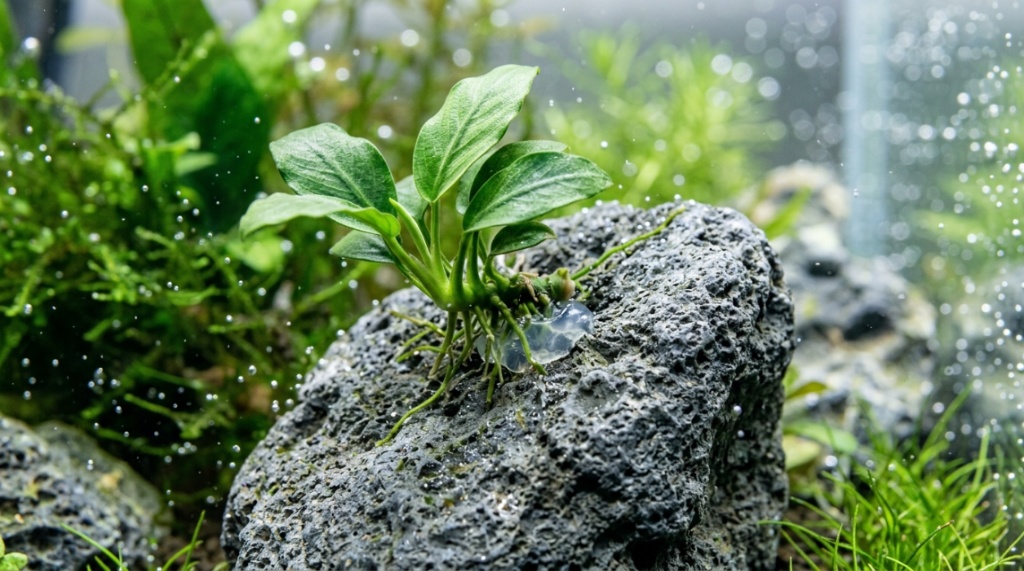
You can glue java fern, anubias, and moss directly to wood or rock. The glue does not harm the plant’s rhizome if applied carefully. Avoid covering the entire root system. A single drop on the rhizome or a few leaves is sufficient. The plant will eventually attach itself naturally as it grows.
How Do You Prepare Your Aquarium Decor Before Gluing?
Preparation determines whether your glue job lasts or fails within hours.
Cleaning and Drying the Surfaces
Both surfaces must be clean. Remove algae, dirt, and biofilm. Rub the area with a stiff brush and rinse thoroughly. For the strongest bond, dry both surfaces with a paper towel just before applying glue. Even a thin layer of water weakens the bond. If you are gluing underwater, you can bypass this step, but the bond will be slightly weaker.
Testing the Fit Before Applying Adhesive
Dry-fit your rocks or wood pieces together before adding glue. Mark their positions with a pencil or take a photo. Once glue touches the surface, you have about 10–20 seconds to make adjustments. Pre-fitting prevents panicked repositioning that ruins the bond.
Gathering the Right Tools
You need a tube of cyanoacrylate gel, a small container of water (if gluing outside the tank), tweezers, and paper towels. Some aquascapers also use a spray bottle with water to accelerate curing. Keep your hands dry—glue sticks to skin very quickly.
How Do You Apply Cyanoacrylate Glue Underwater?
Applying glue underwater is a game-changing technique that allows you to build structures directly in the tank.
The Step-by-Step Underwater Application
- Position the piece where you want it in the tank.
- Apply a small dab of gel directly onto the surface of the object underwater.
- Press the second object firmly against the glued area.
- Hold for 15–30 seconds. The glue will turn white and opaque as it cures.
- Release slowly to test the bond. If it holds, you are done.
Troubleshooting Common Underwater Gluing Problems
If the glue floats away or refuses to cure, the water may be too cold. Cyanoacrylate works best between 65–80°F. Also, avoid excess glue. A pea-sized amount is enough for most joins. Too much glue creates a weak, brittle bond. If the glue does not set, try using a spray bottle with cold water to speed up polymerization.
Using Pressure to Improve Bond Strength
Hold the pieces together with steady, moderate pressure. Do not wiggle them. Movement breaks the initial bond. For larger rocks, use a small clamp or rubber band to hold them in place while the glue cures for 30–60 seconds.
How Do You Apply Cyanoacrylate Glue Outside the Tank (Dry Bonding)?
Dry bonding is easier for beginners and allows you to create complex structures before adding water.
Building Structures on a Workbench
Lay your rocks or wood pieces on a flat surface. Apply glue to both surfaces, press together, and hold for 20 seconds. Spray a mist of water over the join to instantly cure the glue. The bond becomes rock-solid in under a minute. Repeat this process to build arches, caves, or tiered platforms.
Transferring Dry-Bonded Structures Into the Tank
Once the glue has cured completely (wait 5 minutes), you can place the structure into your tank. Submerge it slowly to avoid shocking the bond. Dry-bonded joins are typically stronger than underwater bonds because the glue can fully polymerize without water interference.
Adding Plants to Dry-Bonded Decor
After you place your dry-bonded structure in the tank, you can glue plants onto it using the underwater method. Alternatively, you can attach plants before adding water if you mist them regularly to keep them moist.
How Long Does Cyanoacrylate Glue Take to Dry in an Aquarium?
Curing times vary based on water temperature, humidity, and glue thickness.
Short-Term Curing (Seconds to Minutes)
Initial setting happens within 10–30 seconds in warm water. The glue turns from clear to white, indicating polymerization. You can release pressure after this point, but the bond is not at full strength yet.
Full Cure Time (Hours to Days)
Full strength develops over 24–48 hours. During this time, avoid disturbing the joint. If you are building a heavy rock structure, wait a full day before adding fish or strong water flow. The glue continues to harden as it fully cures underwater.
Accelerating the Cure Process
Spraying the join with cold water or using a fan to increase air circulation speeds up curing. Adding a small amount of baking soda to the glue instantly hardens it, but this creates a rough texture that may not be desirable for all projects.
What Are the Pros and Cons of Using Cyanoacrylate Glue for Aquarium Decor?
Understanding the trade-offs helps you decide when to use this glue versus alternatives.
The Advantages
- Speed: Bonds in seconds, not hours.
- Safety: Non-toxic when cured.
- Versatility: Works on rock, wood, and plants.
- Transparency: Dries clear or white, blending with decor.
- Availability: Cheap and easy to find.
The Disadvantages
- Brittleness: Can break under heavy load or impact.
- Poor on smooth surfaces: Fails on glass and polished stones.
- Skin bonding: Painful if you glue your fingers together. (Acetone or warm soapy water removes it.)
- Limited gap filling: Not ideal for large gaps between uneven rocks.
When You Should Choose an Alternative
If you are bonding large, heavy driftwood or building a multi-story rock wall, consider using epoxy putty or aquarium-safe silicone. These provide stronger structural support for heavy loads. Cyanoacrylate works best for small to medium-sized decorative elements,While securing hardscape elements underwater requires specialized adhesives, securing heavy gear in the outdoors demands entirely different tools. If you also enjoy outdoor sports, check out our guide on how to pick the best rope for PA hunting to ensure your gear stays safely anchored in the trees.”
Can You Remove Cyanoacrylate Glue From Aquarium Decor?
Mistakes happen. Removing cured glue is possible with patience.
Mechanical Removal
Scrape the glue off using a razor blade or a plastic scraper. For wood, use sandpaper to abrade the glue. This takes time but leaves no chemical residue. Avoid metal tools that might scratch glass or acrylic.
Chemical Removal Options
Acetone (nail polish remover) dissolves cyanoacrylate. However, acetone is toxic to fish and must never be used inside an active aquarium. Remove the decor, soak it in acetone for 10 minutes, then scrub off the softened glue. Rinse thoroughly with dechlorinated water before returning to the tank.
Preventing Glue Residue on Plants
If you accidentally glue a plant leaf, gently peel it off while wet. Once dry, the leaf may tear. In most cases, the plant will grow past the glued area. Do not attempt to remove glue from delicate roots or rhizomes—it is safer to leave a small amount on the plant.
What Safety Precautions Should You Follow?
Using glue safely protects you, your fish, and your equipment.
Protecting Your Skin and Eyes
Wear disposable gloves when handling cyanoacrylate. If glue gets on your skin, do not pull it off—soak your fingers in warm, soapy water for 5 minutes, then gently roll the glue away. For eye contact, rinse immediately with water and seek medical attention. Keep the glue away from children and pets.
Ensuring Tank Safety
Never use glue inside a tank with fish present. Always glue decor on a workbench or in a holding container. If you must glue underwater, remove fish first or use a small container of tank water. The glue is safe once cured, but the fumes can irritate fish gills during application.
Storing Your Glue Properly
Cyanoacrylate degrades in heat and humidity. Store it in a cool, dry place. Keep the cap clean—clogged caps are a common frustration. If the nozzle dries out, use a pin to clear it rather than squeezing harder, which can burst the tube.
Frequently Asked Questions
Is cyanoacrylate glue safe for shrimp and snails?
Yes, once fully cured, cyanoacrylate is inert and non-toxic. Shrimp and snails can safely crawl over glued decor. However, avoid using glue near their food sources until the bond has cured completely.
Can I use regular super glue instead of aquarium-specific glue?
You can use regular super glue if the only ingredient is cyanoacrylate. Check the label. Avoid glues with “rubber toughened,” “silicone,” or “accelerant” additives. Gel formulas are best for aquarium use.
How do I remove glue from my fingers quickly?
Soak your fingers in warm, soapy water for 5 minutes. Gently roll the glue off with your other hand. Do not pull or rip it. Acetone works faster but dries out skin. Patience is safer.
Will cyanoacrylate glue harm my aquarium filter?
No, as long as the glue does not enter the water column. Glue only inside the tank or on decor. Cured glue is inert and will not affect filter media or biological filtration.
Can I glue live plants directly to driftwood?
Yes. Place a small drop of gel on the plant’s rhizome or a few leaves. Press it against the wood for 20 seconds. The glue holds until the plant roots itself naturally. Avoid covering the entire root system.
Why does my glue turn white underwater?
Whiteness indicates proper polymerization. The glue reacts with water to form a strong bond. This is normal and safe. The white color often blends with rock and wood after a few weeks as algae grows over it.
How long should I wait before adding water to dry-bonded decor?
Wait at least 5 minutes for the glue to cure fully. For heavy structures, wait 24 hours. This ensures the bond reaches maximum strength before water pressure tests the joint.
Conclusion
Using cyanoacrylate glue for aquarium decor opens up endless creative possibilities. You can build stable rock formations, attach moss to driftwood, and assemble intricate aquascapes that would otherwise be impossible. The key is selecting the right formula—pure cyanoacrylate gel—and applying it correctly, whether underwater or on a dry workbench. Remember to prepare surfaces, hold with steady pressure, and allow full curing time. Your fish and plants will thrive in a beautifully structured environment, and you will enjoy a tank that looks professional without the frustration of collapsing decor. Start your next project with confidence, and do not be afraid to experiment—each successful bond makes you a more skilled aquascaper.