
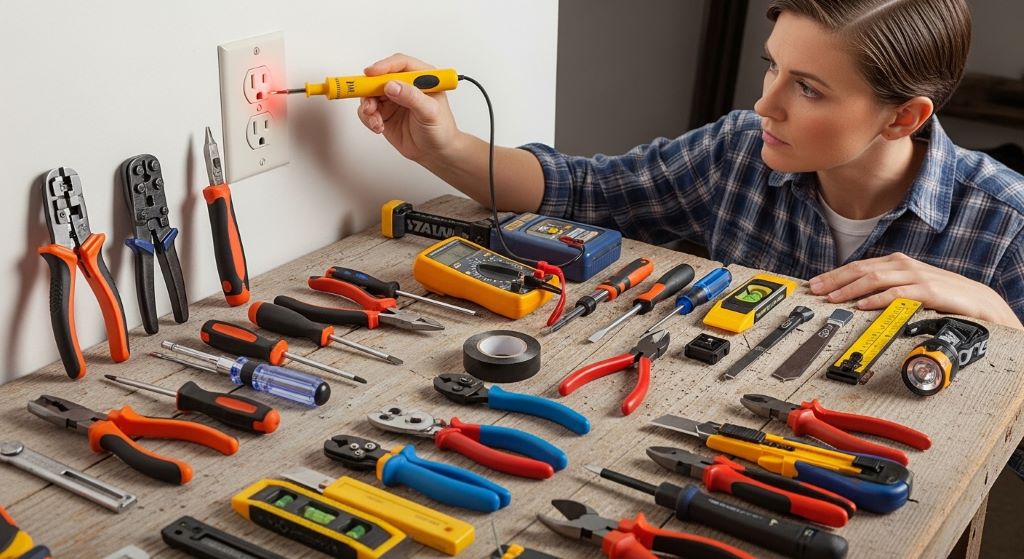
Home wiring projects can feel intimidating. There are wires everywhere, and one wrong move can lead to a serious problem. However, with the right tools and a little knowledge, many basic wiring tasks are completely manageable. The key is preparation.
Choosing the right tools is not just about getting the job done faster. It is about doing it safely. The wrong tool can damage wiring, strip insulation incorrectly, or worse, put you at risk of electric shock. Therefore, before you start any home wiring project, you need to know what to buy and why each item matters.
This guide covers everything you need to know about selecting the right tools, staying safe, and working with confidence.
Why Tool Selection Matters in Home Wiring
Many homeowners underestimate the importance of having the right tools. They grab whatever is nearby and hope for the best. That approach works for some household tasks, but not for electrical work.
Electrical tools are designed with specific safety standards in mind. Insulated handles, voltage rating labels, and precise blade widths all exist for a reason. Using a general-purpose screwdriver on a live wire, for example, can be extremely dangerous. The handle may not be rated for electrical use, and a single slip could cause a serious injury.
Additionally, the right tools make the work more accurate. Poorly stripped wires create weak connections. Weak connections lead to overheating. Overheating leads to fire. This is not meant to scare you. It is simply a reminder that good tools protect both you and your home.
Starting With Safety: What You Need Before Anything Else
Before touching a single wire, safety must come first. There are a few items you should own before starting any wiring project. These are not optional. They are non-negotiable.
A non-contact voltage tester is the single most important tool you can own for electrical work. It tells you whether a wire is live without you needing to touch it. You simply hold it near the wire or outlet, and it beeps or lights up if voltage is present. This takes the guesswork out of the most dangerous step — confirming power is off.
Insulated rubber gloves are equally important. Even when you believe the power is off, gloves add a layer of protection. Look for gloves rated for at least 1,000 volts for residential work.
Safety goggles protect your eyes from sparks, dust, and wire ends. These are especially useful when working in tight spaces like wall cavities or junction boxes.
Together, these items form the foundation of any solid collection of electrical safety tools. Do not skip them to save money. The cost of a hospital visit is far greater.
The Core Wiring Tools List Every Homeowner Should Own
Now that safety gear is covered, it is time to look at the actual working tools. A proper wiring tools list does not need to be long, but each item on it should be purposeful.
Wire Strippers
Wire strippers are designed to remove the plastic insulation from the outside of a wire without cutting the metal conductor inside. This is a precise task. Do it wrong, and the wire is weakened or nicked. A nicked wire creates a point of failure that may not show up for months.
When buying wire strippers, look for ones with labeled gauge holes. Each hole is sized for a different wire thickness. Using the correct hole removes just enough insulation without damaging the metal beneath.
Combination wire strippers that also include a cutter and crimper are a practical choice for most homeowners. They save space in your toolkit and handle multiple tasks efficiently.
Needle-Nose Pliers
Needle-nose pliers are one of the most versatile tools in electrical work. They allow you to bend wires into tight loops, grip small components, and reach into cramped spaces where your fingers cannot go.
For wiring tasks, look for a pair with insulated handles rated for electrical use. Standard pliers without insulation can conduct electricity, which is a serious hazard. Therefore, always confirm the insulation rating before buying.
Lineman’s Pliers
Lineman’s pliers are heavier and more powerful than needle-nose pliers. They are used for twisting wires together, cutting through thick cable, and gripping large connectors. If you plan to do any work involving heavy-gauge wire, these are essential.
Like all electrical hand tools, choose a pair with insulated grips. The best ones are rated to 1,000 volts and clearly labeled on the handle.
Flathead and Phillips Screwdrivers
You will use screwdrivers constantly in electrical work. Outlet plates, switch covers, circuit breakers, and wire terminals all use screws. However, not just any screwdriver will do.
For electrical work, you need screwdrivers with insulated handles rated for voltage. These are marked clearly on the shaft or handle. A full set that includes both flathead and Phillips in multiple sizes will cover almost every situation you encounter.
Fish Tape or Fish Sticks
Running wire through walls is one of the more challenging parts of home wiring. Fish tape is a long, flexible metal or fiberglass ribbon that you thread through a wall cavity to pull wiring from one point to another.
Fiberglass fish tape is the safer choice for electrical work. Metal fish tape can conduct electricity if it accidentally contacts a live wire. Fiberglass does not, which makes it a smarter option for the tool-conscious homeowner.
Fish sticks, also called glow rods, are a simpler alternative. They are short, rigid sections that you link together to push through wall cavities. They work especially well in shorter runs and tight spaces.
Electrical Tape
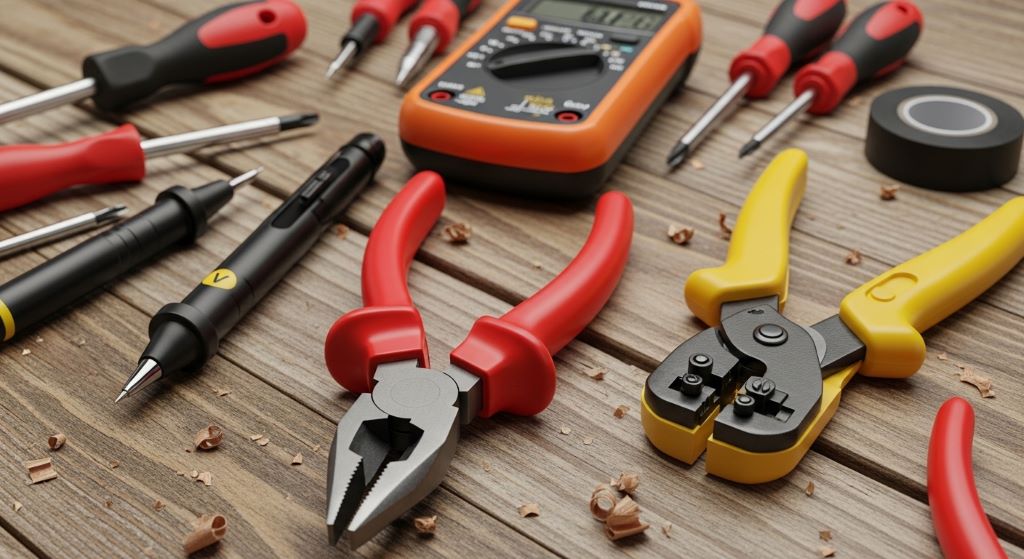
Electrical tape is used to insulate wire connections, cover bare metal, and wrap splices. It stretches and conforms to the wire, creating a secure and watertight seal.
Not all tape is equal. Always use tape rated specifically for electrical use. It should be labeled with a UL listing mark, which confirms it meets safety standards. Standard masking tape or duct tape is not a substitute.
Wire Connectors (Wire Nuts)
Wire nuts are small plastic caps used to join two or more wires together. You twist them clockwise over the exposed wire ends until they sit snugly. They are inexpensive, widely available, and used in almost every wiring task.
They come in different sizes, each color-coded for wire gauge combinations. Using the wrong size can result in a loose connection. Therefore, always check the package to confirm which wire gauges each connector is rated for.
Voltage Tester (Multi-Meter)
A multi-meter goes one step further than a simple voltage tester. It measures voltage, current, and resistance. This allows you to diagnose problems, check outlet function, and verify that your wiring is performing correctly.
Digital multi-meters are the best choice for most homeowners. They display readings clearly and come with safety ratings printed on the device. Look for a model rated CAT III or CAT IV, as these are designed for residential and commercial electrical environments.
Understanding Tool Ratings and Safety Labels
Every electrical tool has ratings. These numbers and letters are not marketing jargon. They are safety specifications that tell you what the tool can safely handle.
The most common rating you will see is the voltage rating, usually displayed as 1,000V or 1000V on insulated tools. This tells you the maximum voltage the handle or insulation can withstand. For residential work, tools rated to 1,000 volts are more than sufficient.
Look also for the VDE mark, which is a German testing standard recognized worldwide, or the UL listed mark common in North America. Both confirm that the tool has passed independent safety testing.
Additionally, the IEC 60900 standard applies specifically to insulated hand tools. If a tool meets this standard, it will say so on the packaging. This is one of the strongest indicators of quality for electrical tools.
How to Organize Your Tools for Efficiency and Safety
Having the right tools is only half the battle. Keeping them organized means you always grab the right one quickly, especially in situations where speed and accuracy matter.
A dedicated tool pouch or electrician’s belt keeps your most-used items within reach. Larger tools can live in a structured toolbox with labeled compartments. The goal is to avoid digging through a pile of unrelated tools when you are mid-project.
Store electrical tools separately from general household tools. This prevents accidental use of non-insulated tools on electrical tasks. It also helps you inspect them regularly for damage, frayed insulation, or worn grips.
Replace any tool with damaged insulation immediately. A cracked or peeling grip is no longer safe to use on electrical work, regardless of how otherwise functional the tool might seem.
Common Mistakes to Avoid When Buying Wiring Tools
Many people make the same few mistakes when buying tools for home wiring. Being aware of them can save you money and prevent accidents.
The first mistake is buying the cheapest option available. Electrical tools are one area where budget products can genuinely put you at risk. A bargain-priced screwdriver with unmarked insulation may not protect you at all. Stick to reputable brands and always check the ratings.
The second mistake is buying too many specialty tools before you know what you need. Start with the essentials on your wiring tools list and add items as specific projects require them. This keeps costs down and your toolbox manageable.
The third mistake is ignoring the condition of used tools. Second-hand electrical tools may have hidden damage to insulation or worn measurement markings. Unless you can verify their condition and ratings, it is better to buy new.
When to Call a Licensed Electrician
Knowing your limits is an important part of safe wiring. Some tasks are well within a homeowner’s ability. Others should always go to a licensed professional.
Simple tasks like replacing an outlet, installing a light switch, or running wire through an existing conduit are generally safe for a prepared homeowner. However, anything involving your main electrical panel, high-voltage circuits, or new circuit installation should be handled by a licensed electrician.
Additionally, if you are ever unsure whether a wire is live after testing, stop. Do not guess. Call a professional. The few dollars saved by doing it yourself are never worth the risk of serious injury.
Permits and inspections also matter. In many regions, any significant wiring work requires a permit and must be inspected by a local authority. Skipping this step can create problems when selling your home and may even void your homeowner’s insurance.
Conclusion
Safe home wiring starts long before you touch a single wire. It starts with choosing the right tools and understanding how to use them correctly.
Begin with your safety essentials: a non-contact voltage tester, insulated gloves, and safety goggles. Then build out your working toolkit with wire strippers, insulated pliers, screwdrivers, fish tape, wire nuts, electrical tape, and a multi-meter. Together, these items form a reliable collection of electrical safety tools that will serve you through many projects.
Always check tool ratings before buying. Look for voltage ratings, VDE or UL marks, and compliance with IEC 60900 standards. Store your tools properly, inspect them regularly, and replace anything with visible damage.
Most importantly, know when a project is beyond your skill level. A licensed electrician is always the right call for complex or high-risk work. With the right preparation and the right tools, home wiring can be done safely, confidently, and correctly.
Frequently Asked Questions
What is the most important tool to have before starting any home wiring project?
A non-contact voltage tester is the most critical tool. It lets you confirm whether a wire or outlet is live without making direct contact, which prevents accidental electrocution before you begin any work.
Do I need electrician-rated tools for basic home wiring tasks?
Yes. Even for simple tasks like replacing an outlet or switch, you should use tools with insulated handles rated for electrical use. Standard household tools may not provide adequate protection against electrical shock.
How many tools are typically on a wiring tools list for a beginner?
A beginner’s list can be kept to seven or eight essential items. These include a voltage tester, wire strippers, insulated pliers, screwdrivers, electrical tape, wire nuts, and a multi-meter. You can expand from there as needed.
Can I use regular pliers instead of insulated electrician’s pliers?
No. Regular pliers do not have insulated grips rated for electrical work. Using them near live wires creates a serious shock hazard. Always use pliers specifically rated for electrical use and labeled with a voltage rating.
What safety gear should I wear when doing home wiring?
At minimum, wear insulated rubber gloves rated for at least 1,000 volts and safety goggles. Working on a dry surface and wearing rubber-soled shoes adds another layer of protection. Always confirm power is off before starting.
Related Topics:
How does an air source heat pump work?
Safer Metal Fabrication Tips