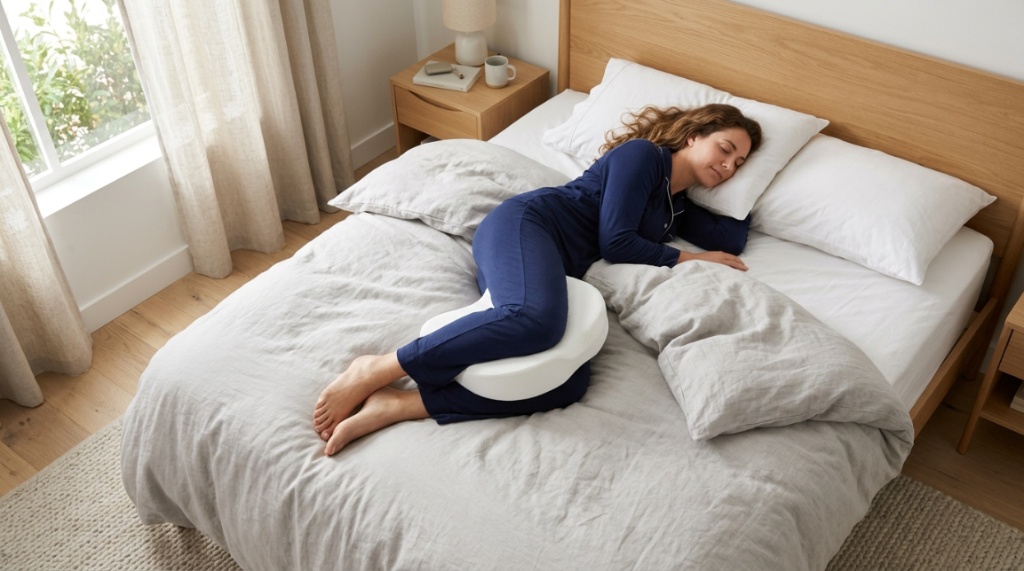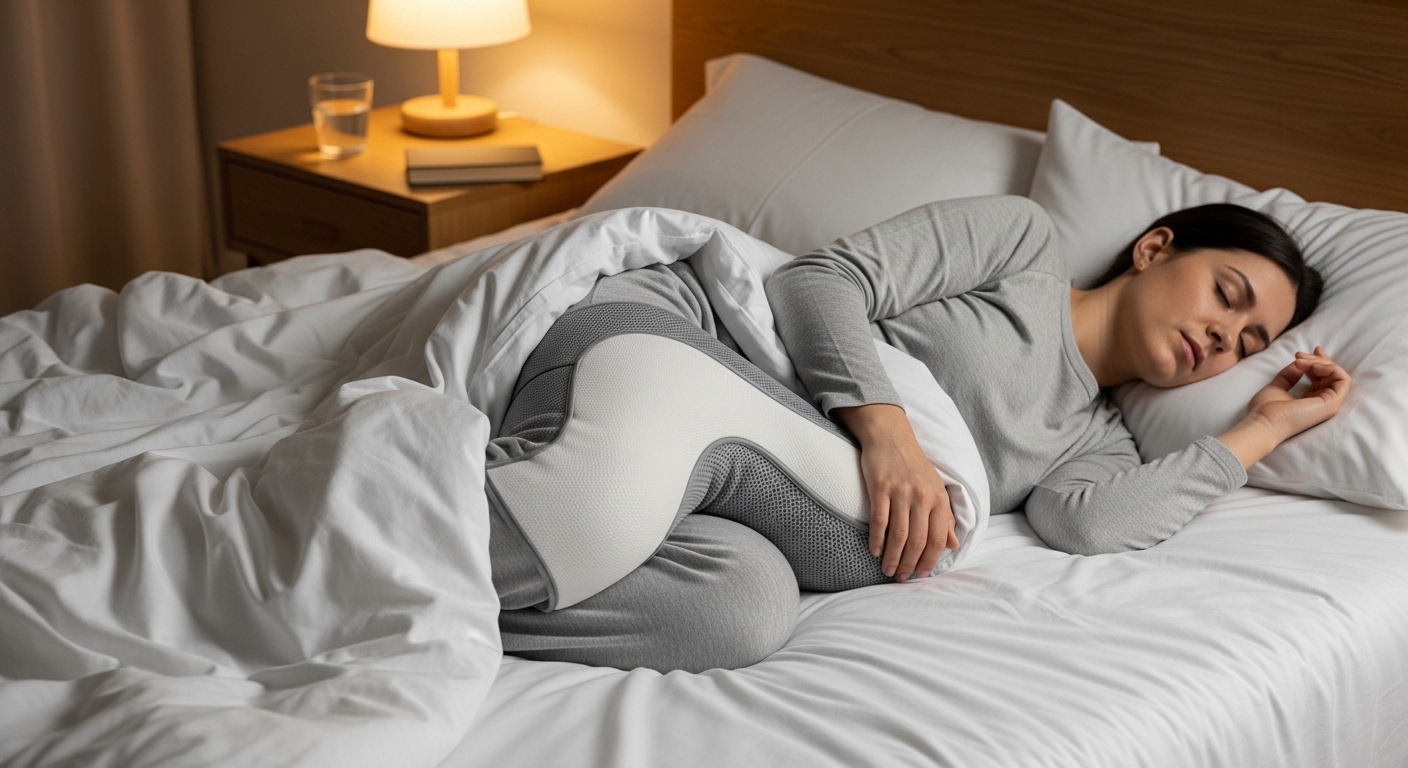
Hip pain at night can quietly damage your sleep quality, posture, and productivity. Many people wake up stiff, sore, and tired without realizing their sleeping alignment is the root cause. A contour knee pillow is one of the simplest and most effective tools to reduce hip strain while sleeping.
A knee pillow for hip pain works by keeping the spine, pelvis, and knees aligned during side sleeping. This reduces pressure on joints, improves circulation, and supports natural posture throughout the night.
Clinical sleep posture studies show that poor hip alignment during sleep increases joint compression and muscle tension, especially in side sleepers. A contour knee pillow creates spacing between the knees and stabilizes the hips, helping reduce inflammation and discomfort over time.
If hip pain interrupts your sleep regularly, this guide explains how a contour knee pillow works, why it helps, and how to use it correctly for better results.
What Is a Contour Knee Pillow and How Does It Reduce Hip Pain While Sleeping?
Short answer: A contour knee pillow reduces hip pain by keeping the legs aligned, preventing pelvic rotation, and lowering joint pressure during sleep.
A contour knee pillow is shaped to sit naturally between the knees when lying on your side. Its ergonomic curve keeps both legs parallel instead of crossing or collapsing inward.
When knees touch during sleep, the upper leg pulls the pelvis forward. This twists the lower spine and places uneven pressure on the hip joint. Over time, this leads to soreness, stiffness, and inflammation.
Using a knee pillow for hip pain creates proper spacing between the thighs. This keeps the spine neutral and reduces strain on surrounding muscles.
- Maintains hip alignment
- Prevents knee-to-knee pressure
- Supports lower back posture
- Improves circulation in the legs
- Reduces muscle tension overnight
Many physical therapists recommend contour knee pillows for side sleepers experiencing hip discomfort.
Why Does Hip Pain Get Worse at Night Without Proper Leg Support?
Short answer: Hip pain worsens at night because unsupported legs rotate the pelvis and increase pressure on the hip joint.
During sleep, muscles relax completely. Without support between the knees, gravity pulls the upper leg downward.
This creates:
- Pelvic rotation
- Spinal misalignment
- Hip joint compression
- Ligament strain
A 2019 sleep biomechanics study found that side sleepers without knee support experienced higher lumbar rotation and hip pressure compared to supported sleepers.
Over several hours, this repeated stress leads to stiffness by morning.
A contour knee pillow prevents this rotation and keeps the pelvis stable.
How Does a Knee Pillow for Hip Pain Improve Spinal Alignment?
Short answer: A knee pillow keeps the spine straight by preventing the upper leg from pulling the pelvis forward.
Spinal alignment directly affects hip comfort. When hips rotate, the lower spine compensates.
This causes:
- Muscle tightness
- Joint irritation
- Nerve compression
- Morning stiffness
A contour knee pillow supports the natural curve of the body from knees to shoulders.
Sleep posture research published in the Journal of Physical Therapy Science reported improved lumbar positioning in participants using leg support pillows during side sleeping.
Better alignment reduces pressure buildup overnight.
Who Should Use a Contour Knee Pillow for Hip Pain Relief?
Short answer: Side sleepers, arthritis patients, pregnant women, and people with lower back pain benefit most from knee pillows.
A knee pillow for hip pain is especially helpful if you:
- Sleep on your side
- Wake up with hip stiffness
- Have sciatica symptoms
- Experience pelvic imbalance
- Have arthritis-related joint pain
- Recover from hip surgery
Pregnancy also increases hip pressure due to weight distribution changes. Doctors often recommend knee support pillows during the second and third trimesters.
Can a Contour Knee Pillow Help with Arthritis-Related Hip Pain?
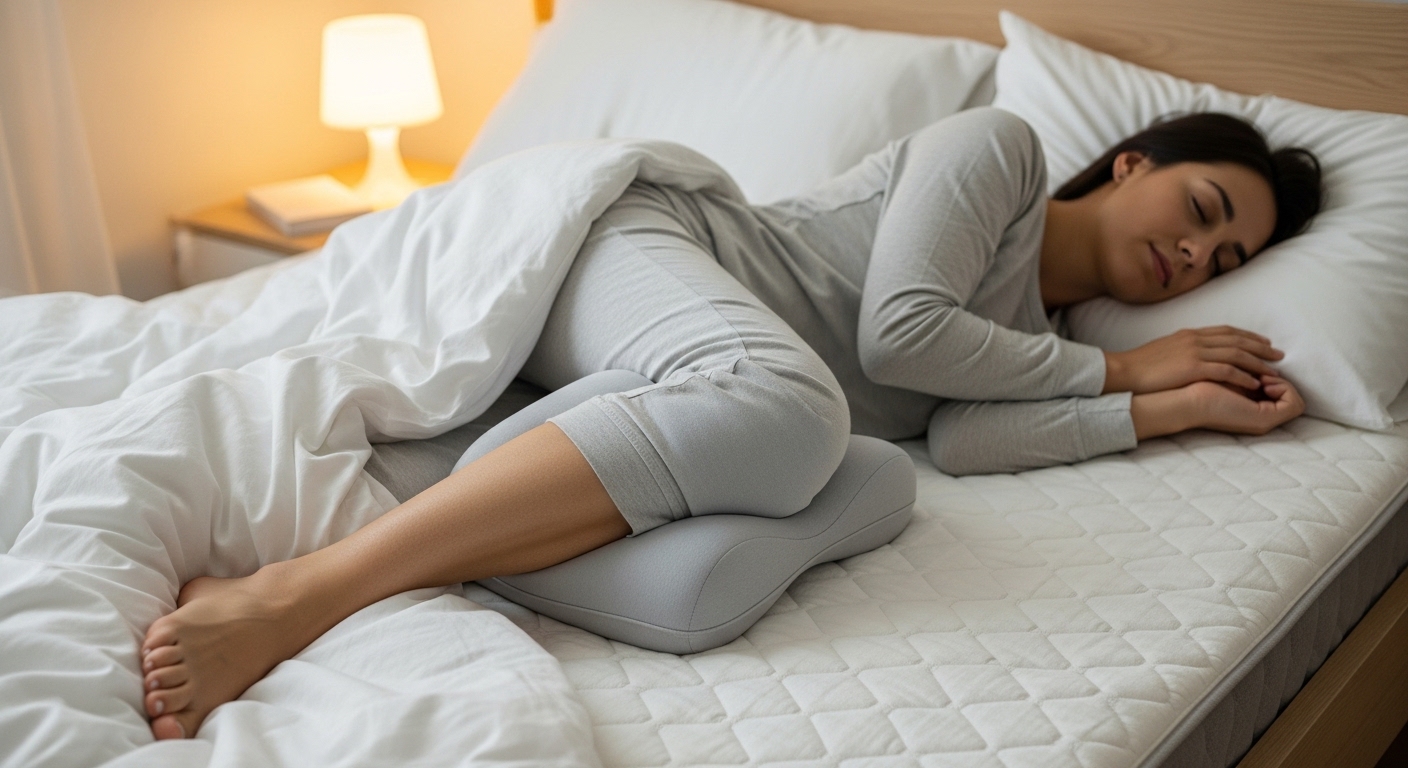
Short answer: Yes. It reduces joint compression and improves sleep posture for arthritis sufferers.
Hip arthritis causes cartilage breakdown between bones. Without cushioning support during sleep, bones experience direct pressure.
A contour knee pillow helps by:
- Reducing joint contact pressure
- Supporting surrounding muscles
- Improving blood flow
- Limiting overnight inflammation
A clinical review from the Arthritis Foundation confirms that sleep positioning tools improve nighttime comfort in patients with hip osteoarthritis.
How Should You Position a Knee Pillow Correctly for Hip Pain Relief?
Short answer: Place the contour pillow between both knees while lying on your side with hips stacked vertically.
Correct placement matters more than most people realize.
Follow these steps:
- Lie on your side
- Place pillow between knees
- Keep hips aligned vertically
- Relax shoulders
- Avoid twisting the torso
If positioned correctly, your spine should feel neutral instead of rotated.
Some sleepers also place part of the pillow between thighs for extra pelvic support.
Does a Memory Foam Contour Knee Pillow Work Better Than Regular Pillows?
Short answer: Yes. Memory foam contour pillows maintain shape and provide consistent alignment support.
Regular pillows flatten overnight. This reduces support effectiveness.
Memory foam contour pillows:
- Retain structure longer
- Distribute weight evenly
- Reduce pressure points
- Improve long-term durability
A sleep ergonomics comparison study showed contour memory foam pillows improved alignment consistency compared to standard fiber pillows.
Can a Knee Pillow Reduce Lower Back Pain Linked to Hip Misalignment?
Short answer: Yes. Proper hip alignment reduces stress on the lower spine.
Hip rotation often leads to lumbar strain. Supporting the knees prevents pelvis tilt.
This helps:
- Relax spinal muscles
- Reduce nerve compression
- Improve posture during sleep
- Lower morning stiffness
Many users report combined improvement in both hip and lower back discomfort after consistent use.
How Long Does It Take to Notice Relief Using a Knee Pillow for Hip Pain?
Short answer: Many people feel improvement within a few nights, with consistent relief after two to three weeks.
Initial comfort changes often appear quickly because alignment improves immediately.
However, long-term muscle adaptation takes time.
| Time Frame | Expected Improvement |
|---|---|
| First night | Reduced pressure while lying down |
| 3–5 nights | Less morning stiffness |
| 2 weeks | Better posture consistency |
| 4 weeks | Noticeable reduction in recurring pain |
Consistency is the key factor.
What Features Should You Look for in the Best Knee Pillow for Hip Pain?
Short answer: Choose ergonomic shape, memory foam support, breathable cover, and proper thickness.
Not all knee pillows provide equal support.
Look for:
- High-density memory foam
- Ergonomic contour design
- Washable cover
- Breathable fabric
- Medium firmness level
These features improve comfort and long-term effectiveness.
Are Contour Knee Pillows Recommended by Physical Therapists?
Short answer: Yes. Physical therapists commonly recommend them for posture correction and joint support.
Therapists often suggest knee pillows during recovery from:
- Hip injuries
- Sciatica
- Disc irritation
- Pelvic imbalance
They are considered a low-cost, non-invasive support solution.
Can Sleeping Without a Knee Pillow Make Hip Pain Worse Over Time?
Short answer: Yes. Poor alignment increases long-term joint strain.
Without support:
- Pelvis rotates nightly
- Spine compensates repeatedly
- Muscles tighten
- Inflammation increases
This cycle gradually worsens discomfort.
A knee pillow interrupts this pattern.
Conclusion: Is a Contour Knee Pillow Worth Using for Hip Pain Relief?
A contour knee pillow is one of the simplest ways to improve sleep posture and reduce hip discomfort without medication or complicated routines.
By keeping your legs aligned and stabilizing your pelvis, it removes unnecessary strain from joints that remain under pressure for hours every night. Over time, this support helps reduce stiffness, improve circulation, and promote deeper sleep.
Sleep posture rarely gets attention until pain becomes persistent. Fixing alignment early prevents long-term joint stress.
If hip pain interrupts your sleep even a few nights per week, adding a knee pillow for hip pain to your routine can make a measurable difference.
Start using a contour knee pillow tonight and give your hips the support they need for better recovery and uninterrupted sleep.
FAQs About Using a Knee Pillow for Hip Pain
Does a knee pillow really help hip pain?
Yes. A knee pillow improves alignment between the hips, knees, and spine, reducing pressure on joints and surrounding muscles.
Can side sleepers benefit the most from contour knee pillows?
Yes. Side sleepers experience the greatest pelvic rotation during sleep, making knee pillows especially effective for them.
Is memory foam necessary in a knee pillow?
Memory foam provides consistent support and maintains shape overnight, making it more effective than regular fiber-filled pillows.
Should the pillow touch both knees and thighs?
Ideally, yes. Supporting both knees and upper thighs improves pelvic stability and alignment.
Can a knee pillow help with sciatica-related hip pain?
Yes. Proper leg positioning reduces nerve compression that contributes to sciatic discomfort.
How firm should a knee pillow be?
Medium-firm support works best because it prevents collapse while remaining comfortable.
Is it safe to use a knee pillow every night?
Yes. Daily use improves posture consistency and supports long-term joint health.
Read More Also: How to modernise a built-in wardrobe
Discover More: Which metals are used for cookware?