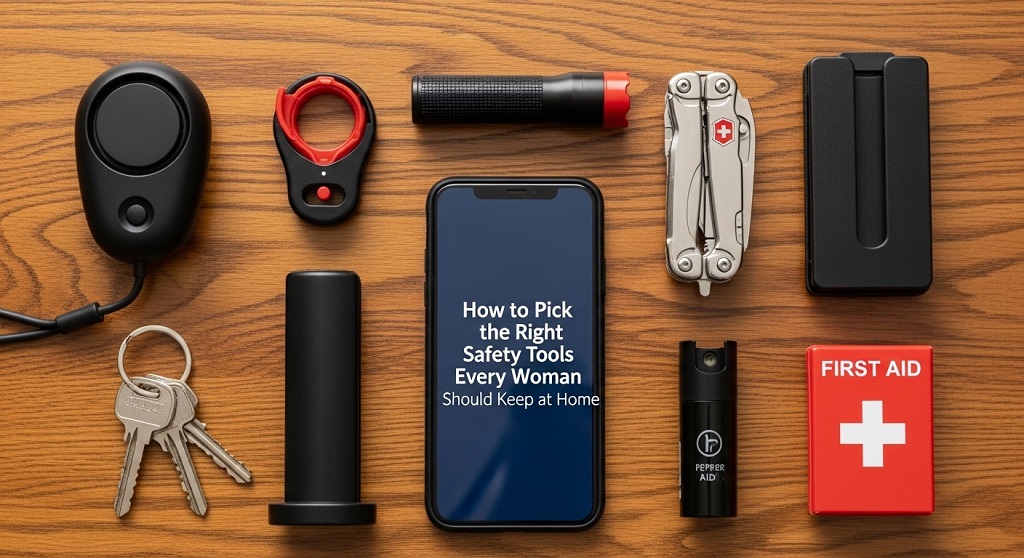
Safety tools for women are practical devices that help prevent accidents, respond to emergencies, and improve personal security inside the home. These include fire extinguishers, personal alarms, door locks, first aid kits, emergency lighting, and smart monitoring tools. Choosing the right combination depends on lifestyle, living space, and risk exposure.
Many women assume home is automatically safe. But everyday risks still exist. Electrical faults. Kitchen fires. Intruders. Medical emergencies. Power outages. These events happen without warning.
Prepared homes reduce response time during emergencies. Faster response often prevents injuries, property damage, and panic decisions. That is why building a simple home safety setup matters.
This guide explains how to choose the right safety tools for women step by step. You will learn what to buy first, what to prioritize on a budget, and how to create a reliable protection system inside your home without confusion or overspending.
Why should women keep dedicated safety tools at home?
Women benefit from dedicated safety tools because they improve emergency readiness, increase independence, and reduce response time during unexpected situations.
Most household accidents happen during routine activities. Cooking. Cleaning. Handling appliances. Living alone increases risk exposure because immediate help may not be available.
Safety tools provide three advantages:
- Faster response during emergencies
- Better control in stressful situations
- Higher confidence while living independently
For example, a basic home safety readiness case study from urban apartment residents showed that households with visible emergency equipment responded to small kitchen fires nearly twice as fast as households without preparation. Quick response prevented damage escalation.
The goal is not fear. The goal is preparedness.
Which safety tools for women should be prioritized first?
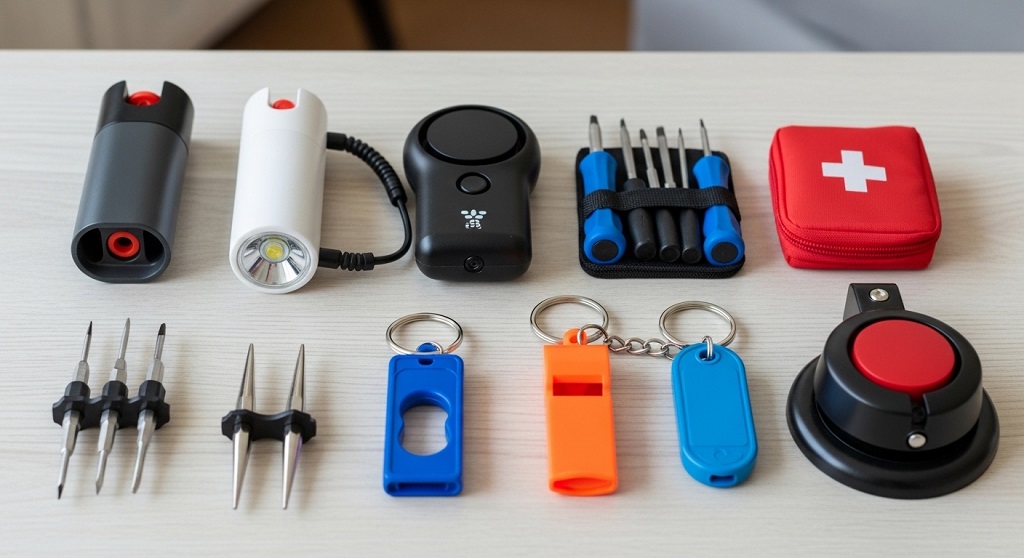
The most essential safety tools every woman should prioritize include a first aid kit, fire extinguisher, emergency light, secure door locks, and a personal alarm.
These tools cover the most common home emergencies.
| Safety Tool | Purpose | Priority Level |
|---|---|---|
| First aid kit | Handles injuries and minor medical emergencies | High |
| Fire extinguisher | Controls early-stage fires | High |
| Emergency light | Provides visibility during power outages | High |
| Door security locks | Prevents unauthorized entry | High |
| Personal alarm device | Alerts others during danger | Medium |
Start with these before adding advanced smart devices.
How does a personal alarm improve home safety for women?
A personal alarm increases safety by creating a loud alert signal that scares intruders and attracts nearby attention.
Personal alarms are compact. Easy to carry. Simple to activate.
They are especially useful for:
- Women living alone
- Late-night movement inside buildings
- Apartment corridor safety
- Emergency distress signaling
Unlike mobile phones, personal alarms work instantly. No unlocking required. No dialing required.
This makes them reliable during panic situations.
What type of door security tools should women install at home?
The most effective door security tools include deadbolt locks, door stoppers, smart door sensors, and peephole cameras.
Door protection is the first layer of home security.
Recommended upgrades include:
- Heavy-duty deadbolt locks
- Portable door wedges
- Smart entry sensors
- Doorbell cameras
A simple door reinforcement setup can prevent most forced-entry attempts. Even portable door stoppers significantly increase resistance against pushing force.
These upgrades are affordable and easy to install.
Why is a fire extinguisher one of the most important safety tools for women?
A fire extinguisher allows women to control small fires immediately before they spread.
Kitchen fires are among the most common household emergencies. Oil overheating. Gas leakage. Electrical sparks.
Having a fire extinguisher nearby changes the outcome.
Choose a multipurpose extinguisher labeled for:
- Electrical fires
- Kitchen grease fires
- Paper and wood fires
Place it in an accessible kitchen corner. Not inside cabinets.
Fast access matters more than storage appearance.
How can emergency lighting improve safety during power outages?
Emergency lighting prevents falls, confusion, and delayed response during sudden power failures.
Power outages create risk in staircases, kitchens, and hallways.
Emergency lighting options include:
- Rechargeable LED lamps
- Motion-sensor night lights
- Portable lanterns
- Solar backup lights
Women living in apartment buildings benefit most from automatic backup lighting systems.
Visibility reduces panic. Clear movement prevents injuries.
What should be included in a first aid kit for women at home?
A complete home first aid kit should include antiseptic solution, bandages, pain relief medicine, gloves, gauze, scissors, and emergency contact information.
Many homes keep incomplete kits. That reduces usefulness.
A proper setup includes:
- Antiseptic wipes
- Sterile gauze pads
- Adhesive bandages
- Medical tape
- Pain relief tablets
- Thermometer
- Emergency numbers list
Store the kit in an easy-to-reach location.
Label it clearly.
Are smart safety devices useful for women living alone?
Smart safety devices provide remote monitoring, instant alerts, and real-time visibility that improve independent living security.
Smart home protection tools include:
- Doorbell cameras
- Motion detectors
- Window sensors
- Smart locks
- Emergency alert apps
These tools send notifications directly to mobile devices.
They allow quick action even when inside another room.
Smart monitoring creates awareness without complexity.
How can women choose safety tools based on their living situation?
The right safety tools depend on whether a woman lives alone, with family, in an apartment, or in a shared house.
Each environment has different risks.
- Apartment residents benefit from door sensors and alarms
- Independent house residents need outdoor lighting
- Shared housing residents need personal alarms
- Students need portable safety tools
Customization improves effectiveness.
There is no universal setup.
Which budget-friendly safety tools offer the highest protection value?
The most affordable high-impact safety tools include door wedges, emergency lights, first aid kits, and portable alarms.
These tools cost less but improve readiness significantly.
Recommended low-cost safety upgrades:
- Rechargeable flashlight
- Door stopper wedge
- Compact alarm keychain
- Basic first aid kit
Small investments create strong protection layers.
How should safety tools be placed inside the home for maximum effectiveness?
Safety tools should be visible, reachable, and placed near high-risk areas such as kitchens, entrances, and bedrooms.
Placement strategy matters.
Recommended layout:
- Fire extinguisher near kitchen exit
- Emergency light in hallway
- Alarm near bedside table
- First aid kit in living area
Visibility improves reaction speed.
What mistakes should women avoid when choosing safety tools?
The biggest mistakes include buying too many devices at once, ignoring placement strategy, and choosing complicated tools.
Common errors include:
- Buying tools without learning how to use them
- Storing emergency items in hidden drawers
- Ignoring maintenance checks
- Choosing appearance over functionality
Simple setups work best.
How do layered safety tools create stronger protection at home?
Layered safety protection combines physical security, emergency readiness, and monitoring tools to reduce overall risk exposure.
Think of safety in three layers:
- Entry protection
- Emergency response tools
- Communication devices
Example layered setup:
- Door lock + sensor
- Fire extinguisher + alarm
- Emergency light + phone alerts
This structure improves preparedness without complexity.
Conclusion: How can women build a reliable home safety system today?
Building a reliable home safety setup does not require expensive equipment or technical knowledge. It starts with simple decisions. A first aid kit. A fire extinguisher. Strong door protection. Emergency lighting. These tools create the foundation of a safer living environment.
Prepared homes respond faster during emergencies. They reduce confusion. They prevent damage escalation. Most importantly, they increase confidence for women living independently or managing households.
Start small if needed. Add one safety tool at a time. Focus on accessibility, placement, and usability instead of buying everything at once.
If you are planning to upgrade your home safety setup today, begin with the essential checklist shared above and create a personalized protection system that fits your lifestyle and space.
Take action now. Review your home environment and install at least one essential safety tool this week to improve your household readiness.
FAQ: Safety tools for women
Which safety tools should every woman keep at home?
Every woman should keep a first aid kit, fire extinguisher, emergency lighting device, secure door lock system, and personal alarm. These tools cover the most common household emergencies.
Are personal safety alarms effective indoors?
Yes. Personal alarms create loud alert signals that attract attention and discourage intruders. They are useful for apartments, shared housing, and independent living environments.
Where should a fire extinguisher be placed inside the home?
A fire extinguisher should be placed near the kitchen exit, not inside cabinets. It must remain visible and reachable during emergencies.
Do women living in apartments need smart safety devices?
Smart devices such as door sensors and camera doorbells improve apartment security by sending alerts when unexpected movement or entry attempts occur.
What is the most affordable safety upgrade for women at home?
A door stopper wedge is one of the most affordable and effective safety upgrades. It strengthens entry resistance and improves nighttime security.
How often should home safety tools be checked?
Safety tools should be checked every three to six months to ensure batteries, pressure levels, and functionality remain reliable.
Is emergency lighting necessary even in cities with stable electricity?
Yes. Emergency lighting prevents accidents during unexpected outages and helps maintain visibility during nighttime emergencies.
Read More Also How to Find the Best Fishing Combos
Learn More Pick the Best Rod for Beach Fishing on a Budget