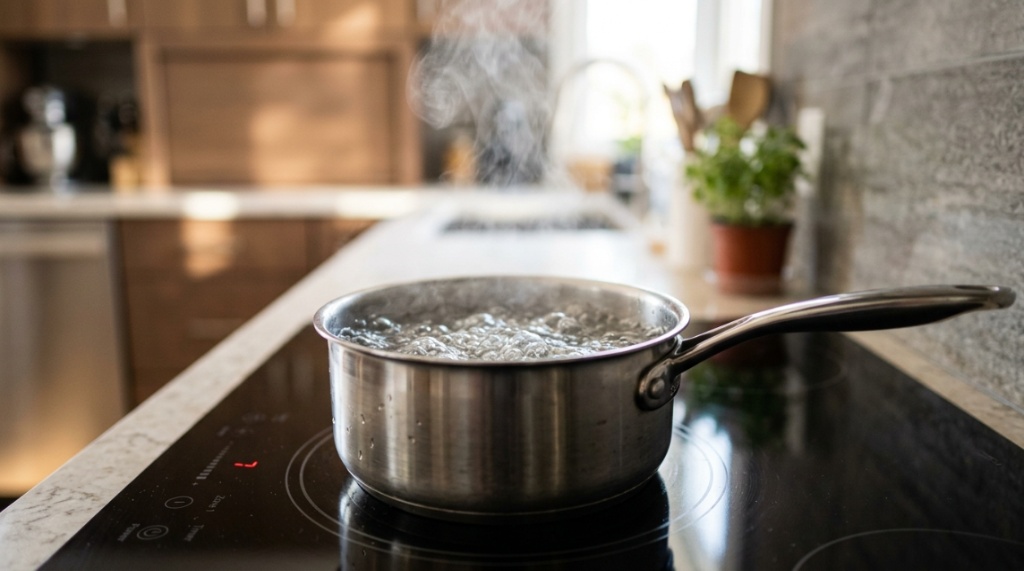
You stand in your kitchen, watching a pot of water slowly boil on your old electric coil stove, waiting, and waiting. The heat feels uneven, the kitchen gets uncomfortably hot, and cleaning the burnt-on spills after dinner feels like a punishment. You know you deserve a better cooking experience, but the thought of a full renovation feels overwhelming and expensive. What if you could transform your entire cooking routine in a single afternoon without ripping out cabinets or calling an electrician? That is the reality of a kitchen upgrade induction cooktop offers. This guide will walk you through exactly how induction works, why it outperforms gas and electric, and how to make the switch without regret.
What Exactly Is an Induction Cooktop and How Does It Work?
An induction cooktop uses electromagnetic energy to heat your pan directly, rather than heating a burner or a glass surface. It only activates when a magnetic pan is placed on it, and the pan itself becomes the heat source.
The Science Behind Magnetic Induction
Inside the cooktop, copper coils generate a high-frequency alternating magnetic field. When you place a ferromagnetic pan on the surface, that field induces electric currents inside the pan. Those currents create resistance, which generates heat. The cooktop surface stays cool because the heat is created inside the pan, not beneath it.
How Induction Differs from Gas and Electric
Gas stoves burn natural gas to create an open flame, losing about 60% of the heat to the surrounding air. Traditional electric coils heat a metal burner, then transfer that heat to the pan through direct contact, which is slow and inefficient. Induction skips the middle step entirely, transferring up to 90% of the energy directly to the pan. That difference explains why induction boils water in half the time and keeps your kitchen cooler.
What Happens to Your Existing Cookware
Not every pan works with induction. You need cookware with a magnetic base. The simplest test: hold a refrigerator magnet to the bottom of your pan. If it sticks, it will work. Most stainless steel and cast iron pans are compatible. Pure aluminum and copper pans will not work unless they have a magnetic layer bonded to the bottom.
Why Should You Switch to Induction for Your Kitchen Upgrade?
Switching to induction is not just about faster cooking. It is about safety, energy efficiency, precision, and easier cleaning. For most home cooks, induction delivers a better everyday experience than gas or traditional electric.
Energy Efficiency and Lower Utility Bills
Because induction transfers heat directly to the pan with minimal waste, you use less electricity for the same cooking tasks. On average, induction is 30% more energy-efficient than standard electric resistance cooktops and about 50% more efficient than gas. Over a year, that adds up to noticeable savings on your utility bill.
Safety Advantages for Families
The cooktop surface never gets hot enough to cause a serious burn. A pot of boiling water can be sitting on a cool surface. This eliminates the risk of flammable items igniting and reduces the chance of burns if someone accidentally touches the cooktop. Induction also automatically shuts off if you remove the pan. That is a massive safety upgrade for households with children or elderly relatives. Once you transition to an induction cooktop, you will want to ensure your cookware is magnetic—such as cast iron or multi-clad stainless steel. Organizing these pots, pans, and specialty tools is key to an efficient workflow, much like stocking your cupboard essentials for Italian cooking to make meal prep effortless.
Precision Cooking Control
Induction responds almost instantly to temperature adjustments. Turn the dial up and the pan heats immediately. Turn it down and heat drops just as fast. This level of control rivals professional gas ranges and is impossible with standard electric burners. You can simmer delicate sauces without scorching or boil pasta water in under four minutes.
How Do You Choose the Right Induction Cooktop for Your Kitchen?
Selecting the right induction cooktop depends on your kitchen layout, your cooking habits, and your budget. The key factors are size, number of burners, power settings, and additional smart features.
Freestanding vs. Slide-In vs. Portable Units
- Freestanding ranges: These are full stoves with an oven below. They are the easiest swap if you currently have a gas or electric range, as they fit into the same 30-inch slot.
- Slide-in cooktops: These drop into a countertop cutout, ideal for built-in kitchen designs. You need to measure your existing cutout carefully.
- Portable induction burners: Single-burner units that plug into a standard wall outlet. They are great for apartment dwellers, RV cooking, or as a test run before committing to a full-size unit.
Power Levels and Burner Configurations
Look for a cooktop with at least one high-power burner rated at 3,000 watts or more for boiling and searing. A dual or triple ring burner provides flexibility for different pan sizes. Some models offer a “bridge” function that joins two burners into one large cooking zone for griddles or rectangular pans.
Smart Features to Consider
Many modern induction cooktops include touch controls, timer functions, child locks, and auto-shutoff features. Some even sync with smart home systems or have Wi-Fi connectivity for remote control. While not essential, these extras can make daily cooking more convenient. If you are looking for budget-friendly options that still deliver high performance, you can explore a reliable kitchen upgrade induction cooktop that balances cost with quality.
Can You Install an Induction Cooktop Yourself?
You can install a plug-in portable unit yourself in seconds. Hardwired or built-in cooktops require electrical work that most homeowners should leave to a licensed electrician.
Electrical Requirements for Built-In Models
Most built-in induction cooktops require a dedicated 240-volt circuit, similar to what an electric range uses. If your kitchen currently has a gas stove, you may need to run a new electrical line. Always check the manufacturer’s specifications, which will list the required amperage (typically 30 to 50 amps).
Steps for a Simple Swap-Out
- Turn off power at the breaker box.
- Disconnect the old cooktop or range.
- Measure the cutout in your countertop to ensure the new unit fits.
- Install any required trim kits or brackets.
- Connect the wiring (or hire an electrician).
- Secure the cooktop and restore power.
- Test the unit with a compatible pan.
What About Ventilation?
Induction produces less ambient heat and fewer combustion byproducts than gas, but you still need ventilation for steam, smoke, and cooking odors. If you already have a range hood, it will work fine. If you do not, consider installing an overhead vent or a downdraft system for optimal air quality.
What Cookware Do You Need for Induction Cooking?
The most common frustration with induction is discovering that your favorite pan does not work. The good news is that induction-compatible cookware is widely available and affordable.
Testing Your Current Pans
Grab a small magnet and test every pan you own. Cast iron, enameled cast iron, and magnetic stainless steel will work. Pans labeled “induction-ready” have a symbol on the bottom that looks like a squiggly coil or a rectangle with loops. You may be surprised how many of your existing pans pass the magnet test.
Best Materials for Induction
- Cast Iron: Excellent heat retention, perfect for searing and baking
- Enameled Cast Iron: Durable, non-reactive, and great for stews
- Tri-Ply Stainless Steel: Even heating, lightweight, and dishwasher-safe
- Carbon Steel: Responsive heating, popular in professional kitchens
Pans to Avoid
Pure aluminum, copper, glass, and ceramic cookware without a magnetic base will not activate the induction burner. Some manufacturers make induction-compatible versions of these materials by bonding a magnetic layer to the bottom. Always check the label before purchasing.
How Does Induction Cooking Change Your Daily Routine?
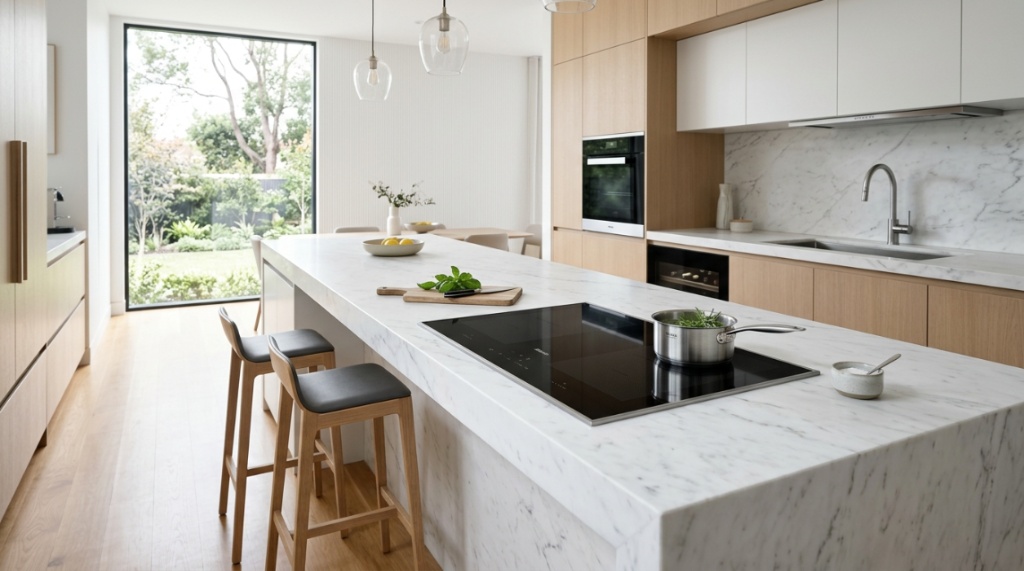
Switching to induction requires a small adjustment in how you interact with your stove, but most people find the learning curve short and the benefits immediate.
Faster Boiling and Searing
Induction boil water about twice as fast as gas and three times faster than electric coils. That means pasta dinners are ready sooner, and soups start bubbling quickly. For searing meat, induction provides intense, consistent heat that browns food deeply without hot spots.
Cleanup Becomes Effortless
Because the glass surface stays relatively cool, spills do not bake on. If something boils over, it stays liquid and wipes away easily with a damp cloth. Burnt-on crusts and sticky residue are almost non-existent. You will spend far less time scrubbing the stove after cooking.
Temperature Control Is More Responsive
On a gas stove, turning the knob down takes a few seconds for the flame to shrink and the pan to cool. On electric, the burner stays hot for minutes. Induction adjusts instantly. If your sauce starts to boil too aggressively, simply lower the setting and the heat drops immediately.
Which Induction Cooktop Features Matter Most for Daily Use?
Not all induction cooktops are created equal. Some features genuinely improve your cooking experience, while others are just marketing fluff.
Power Boost Function
A power boost temporarily redirects all available energy to one burner. This is invaluable for rapidly boiling water or achieving a high-heat sear without waiting. Look for a boost function on at least one burner.
Pan Detection and Auto-Sizing
More advanced cooktops automatically detect the size of the pan and adjust the heating zone to match. This prevents wasted energy and uneven cooking. Some models even have an indicator light that shows which area is active.
Child Safety Lock
Most induction cooktops include a lock feature that disables the control panel. This is simple to activate and gives peace of mind when young children are in the kitchen. Some models also have a residual heat indicator that warns if the surface is still warm.
How Much Does an Induction Cooktop Cost?
Induction cooktops range from budget-friendly portable units to high-end professional-grade ranges. Understanding the price spectrum helps you set realistic expectations.
Budget Options Under $500
Portable single-burner units start around $60. Basic 30-inch freestanding ranges from brands like Frigidaire or GE can be found for $400 to $500. These models offer essential induction functionality without premium features like smart controls or high wattage.
Mid-Range Cooktops $500 to $1,500
This range includes better build quality, higher wattage burners, more precise temperature control, and often four or five cooking zones. You will find models with bridge zones, power boost, and touch controls. These are the most popular choices for typical home kitchens.
Premium Options Above $1,500
High-end brands like Thermador, Wolf, and Miele offer induction cooktops with advanced features like Wi-Fi connectivity, professional-grade power (up to 5,000 watts per burner), and sleek designs. These are ideal for serious home cooks who value performance and aesthetics.
What Are the Most Common Misconceptions About Induction Cooking?
Many people hesitate to switch because of myths that simply are not true. Let us clear up the most persistent ones.
Induction Cooktops Are Noisy
Some units produce a faint humming or buzzing sound, especially at high power. This is the sound of the magnetic coil vibrating. It is not loud enough to be disruptive during conversation or while cooking, but it is noticeable in a quiet kitchen. Higher-end models are better insulated and quieter.
Induction Is Dangerous Because of Electromagnetic Fields
Induction cooktops generate low-frequency electromagnetic fields. Studies show that the levels are well within international safety standards for household appliances. The field only exists when a pan is on the cooktop, and it decreases rapidly with distance. For everyday use, induction is considered safe.
You must buy all new cookware.
This is the most common myth. In reality, many people already own compatible pans. Cast iron, many stainless steel pots, and enameled cookware often work perfectly. You may need to replace one or two pieces, but not an entire kitchen set.
Is Induction Better for the Environment Than Gas?
Yes, induction is significantly better for the environment than gas. It is also better than standard electric resistance cooktops when powered by renewable energy.
Lower Carbon Emissions
Gas stoves release carbon dioxide, nitrogen dioxide, and methane directly into your home. Studies have linked gas cooking to higher rates of childhood asthma and reduced indoor air quality. Induction produces zero combustion byproducts. When your electricity comes from renewable sources, the carbon footprint of induction is nearly zero.
Reduced Energy Waste
The high efficiency of induction means less energy is wasted as ambient heat. This reduces the total energy demand from your home, which lowers the environmental impact of cooking. Over a decade, an induction cooktop uses significantly less electricity than an equivalent gas or electric model.
Frequently Asked Questions
Can I use induction cookware on a regular electric stove?
Yes, induction-compatible cookware works perfectly on gas, electric, and ceramic cooktops. The magnetic base does not impair performance on other heat sources.
Does induction cooktop work during a power outage?
No, induction cooktops require electricity to operate. If you live in an area prone to power outages, keep a portable gas camp stove or butane burner as a backup.
How long does an induction cooktop last?
With proper care, a quality induction cooktop lasts 15 to 20 years. The glass surface is durable, and the electronics are sealed against moisture. Avoid dropping heavy objects on it to extend its lifespan.
Can I use a wok on an induction cooktop?
Yes, but you need a flat-bottomed wok designed for induction. Traditional round-bottom woks do not make full contact with the glass surface and will not heat properly.
Is induction cooking expensive to run?
Induction is more energy-efficient than gas or electric, so it typically costs less to run per cooking session. Your specific cost depends on your local electricity rates and usage habits.
Do induction cooktops scratch easily?
The ceramic glass surface is tough but can be scratched by dragging pans across it or by grit trapped under cookware. Use a soft cloth and avoid sliding pans to maintain the surface.
Can I install an induction cooktop over a drawer or oven?
Yes, but you need to ensure proper ventilation. Many induction cooktops have built-in cooling fans that pull air from beneath the unit. Do not block these vents. Check the manufacturer’s clearance requirements.
Final Thoughts on Making the Switch
Upgrading your kitchen with induction cooking is one of the most practical and rewarding changes you can make. You get faster cooking, better temperature control, easier cleaning, improved safety, and lower energy costs. The initial investment pays off quickly through reduced utility bills and fewer frustrations during meal prep. Whether you choose a portable burner to test the waters or a full-size range as your new centerpiece, induction will change how you think about cooking. Start by checking your cookware with a magnet, measure your counter space, and pick a model that fits your budget and lifestyle. The upgrade is simpler than you think, and the results are immediate.