You’ve got the truck, you’ve got the board, but getting both to the beach without chaos is another story. Throwing a surfboard in the bed works for short trips, but it eats up space, risks board damage, and leaves you without room for gear or passengers. Finding the right surfboard car rack for trucks solves that problem, but the options can feel overwhelming. Bed racks, tailgate pads, cab racks, and hitch-mounted systems all promise to do the job. This guide breaks down the key differences, what actually matters for your truck, and how to choose a setup that fits your driving style and your board collection.
Why a Standard Car Rack Doesn’t Always Work on a Truck
Most roof racks are designed for sedans, hatchbacks, and SUVs with factory roof rails. Trucks present a different challenge because the cab is shorter than the bed, and the roof itself may not have mounting points. A standard clamp-on roof rack can work on some truck cabs, but it often sits too far forward, leaving the board hanging over the windshield or extending awkwardly past the tailgate.
That’s why truck-specific solutions exist. They account for the unique geometry of a pickup, including the gap between the cab and the bed, the height of the tailgate, and the fact that many trucks have tonneau covers or bed liners that interfere with traditional mounting systems.
The Main Types of Truck Surfboard Racks
Before you buy anything, understand the four main categories. Each has distinct strengths and trade-offs depending on how you use your truck.
- Bed racks: These mount to the bed rails or stake pockets and rise above the bed. They’re versatile, hold multiple boards, and keep the bed usable for other cargo.
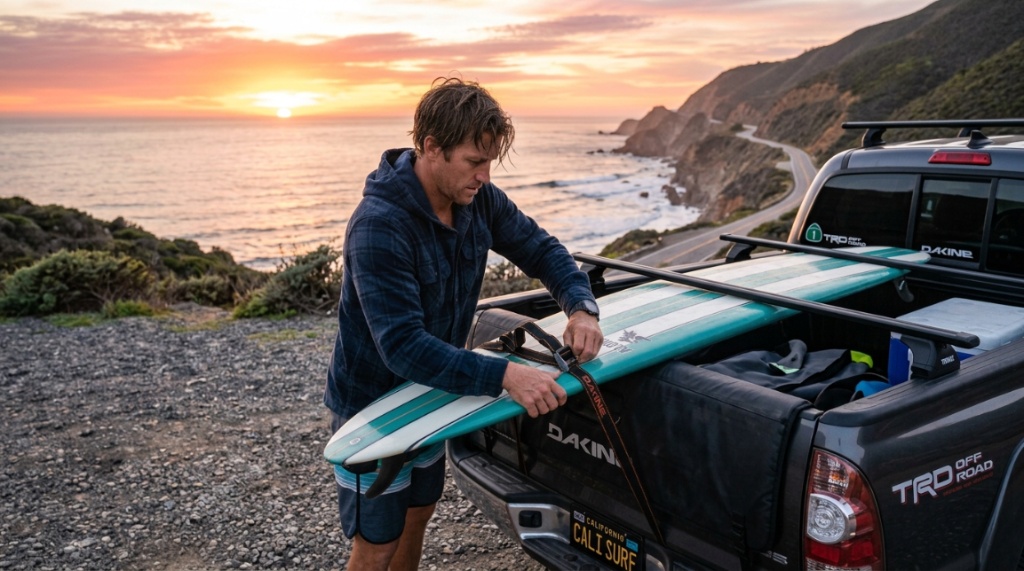
- Tailgate pads: A padded cover that drapes over the tailgate. Boards slide between the pad and the tailgate, with the nose extending over the cab. Simple, affordable, and ideal for quick trips.
- Cab racks: Mount to the roof of the cab using clamps or gutter mounts. Best for single boards or short boards, but limited by cab length.
- Hitch-mounted racks: Slide into the receiver hitch and hold boards vertically or horizontally behind the truck. Good for trucks with short beds or when you need to keep the bed completely free.
What to Consider Before Buying a Truck Surfboard Rack
Choosing a rack isn’t just about picking the most popular option. Your truck’s bed length, cab style, and how often you carry boards all influence the right choice. Here are the factors that matter most.
Bed Length and Cab Configuration
A crew cab with a 5.5-foot bed has different needs than a regular cab with an 8-foot bed. Longer beds give you more flexibility with tailgate pads because the board has more support. Shorter beds often require a bed rack or a cab rack to keep the board stable at highway speeds.
If you have a tonneau cover, check whether it’s compatible with bed racks. Some covers are designed to work with T-slot rails or stake pocket mounts, while others block access entirely. Soft roll-up covers are usually easier to work around than hard folding covers.
How Many Boards Do You Carry?
Tailgate pads typically hold 4 to 10 boards depending on the width of the pad and the thickness of the boards. Bed racks can hold more, especially if you add crossbars or use a vertical storage system. If you regularly drive with friends or family, a tailgate pad is often the most practical choice because it’s quick to load and unload.
For solo surfers carrying one or two boards, a cab rack or a hitch-mounted rack might be simpler and less intrusive.
Driving Distance and Speed
Short drives to a local beach don’t demand the same level of security as a multi-hour highway trip. At higher speeds, wind resistance and vibration become real concerns. Bed racks and cab racks with proper tie-down points generally offer more stability than tailgate pads, which can flap at speed if not secured correctly.
If you frequently drive on freeways, look for racks with rubber padding, locking mechanisms, and straps that cinch down firmly. Loose boards shift, create noise, and can damage your board or your truck.
Bed Racks: The Most Versatile Option
Bed racks are the go-to choice for surfers who need flexibility. They mount to the bed and rise above it, creating a platform for boards, kayaks, or even a rooftop tent. Most systems use crossbars that can be adjusted for width and height.
The main advantage is that you can still use the bed for coolers, camping gear, or luggage while the boards sit on top. That makes bed racks ideal for surf trips that involve overnight stays or multiple stops.
Installation varies by brand. Some racks clamp onto the bed rails without drilling, while others require permanent mounting. If you lease your truck or don’t want to modify it, look for clamp-on systems that can be removed in minutes.
Bed Rack Limitations
Bed racks add height to your truck, which can be a problem if you park in a garage or drive under low clearance structures. They also create wind noise at highway speeds, especially if the crossbars are not aerodynamic. And if you frequently use your bed for hauling dirt, gravel, or construction materials, a bed rack can get in the way.
Another overlooked issue is board access. With a bed rack, you have to reach up to place boards on the crossbars. If you’re short or have limited shoulder mobility, that can be awkward. Tailgate pads are much easier to load because the boards rest at waist height.
Tailgate Pads: Simple, Affordable, and Popular
Tailgate pads are the most common surfboard rack solution for trucks, and for good reason. They’re inexpensive, easy to install, and work with almost any truck. The pad drapes over the tailgate, and boards slide between the pad and the tailgate itself. The nose of the board extends toward the cab, and the tail rests on the pad.
Most pads use straps that hook into the bed or the tailgate seams to keep the pad in place. Loading a board takes about 10 seconds, which makes tailgate pads perfect for spontaneous surf sessions.
When a Tailgate Pad Makes Sense
If you drive a truck with a bed longer than 6 feet, a tailgate pad is usually the best choice. The longer bed supports more of the board, reducing stress on the nose and tail. Tailgate pads also work well for shortboards, funboards, and fish shapes. Longboards can be tricky because the nose may extend too far over the cab, creating wind lift at speed.
One thing to watch: tailgate pads block access to the bed when installed. If you need to load gear into the bed, you have to remove the pad or work around it. Some pads fold down or have a hinge system, but most require full removal.
Cab Racks and Hitch Racks: When Space Is Tight
Not every truck setup works with a bed rack or tailgate pad. If you have a short bed, a camper shell, or a bed full of tools, a cab rack or hitch rack might be the better answer.
Cab Racks for Single Boards
Cab racks mount directly to the truck roof and are best for carrying one or two shortboards. They keep the bed completely free and are relatively easy to install. The downside is that truck cabs are shorter than most surfboards, so the board will overhang the front or back of the cab. That’s fine for short drives but can create wind noise and instability at highway speeds.
Cab racks also require a roof that can support the weight and clamping force. Most modern trucks have reinforced roofs, but check your owner’s manual before installing a clamp-on rack.
Hitch Racks for Maximum Bed Access
Hitch-mounted racks slide into the receiver and hold boards either vertically or horizontally. They’re a great option if you need the bed for other cargo and don’t want anything mounted to the roof or bed rails. Some models fold up when not in use, which is convenient for parking.
The main drawback is that hitch racks extend the length of your truck, making parking and turning more difficult. They can also obstruct your rear view or block the license plate, depending on the design. Check your state’s laws regarding license plate visibility and load extension before committing to this style.
Before hitting the waves with your freshly mounted board, make sure you have the right gear by choosing the Right Surfboard Leash for Safety and Performance.
How to Secure Your Boards Properly
No matter which rack you choose, proper strapping is essential. A loose board is dangerous to you and other drivers. Here’s a simple process that works for most setups.
- Place the board on the rack with the fins facing up or down depending on the rack design. For tailgate pads, fins usually face up to avoid scratching the tailgate.
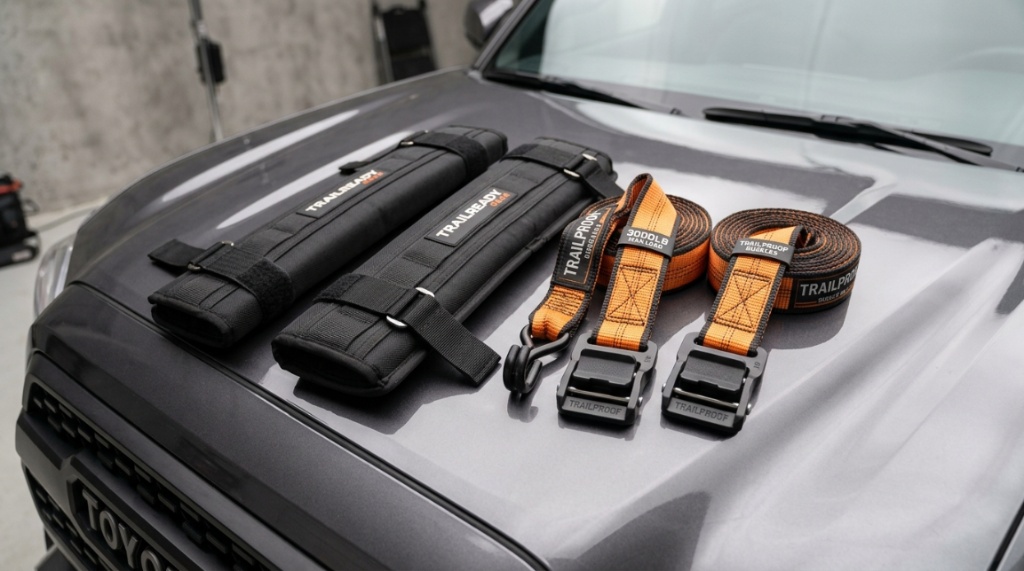
- Use the rack’s built-in straps or add your own cam buckle straps. Avoid bungee cords, which stretch and can release at speed.
- Tighten the straps until the board doesn’t move when you push on it. Check again after driving a few miles, as straps can loosen.
- If you’re carrying multiple boards, place a soft layer between them to prevent fin damage and pressure dings.
- For long drives, add a bowline or nose tie to the front bumper or tow hook to reduce wind lift.
Common Mistakes to Avoid
Many surfers make the same errors when setting up a truck rack. Here are the ones that cause the most problems.
- Over-tightening straps: You can dent the rails or crack the board’s foam if you crank down too hard. Snug is enough.
- Ignoring fin placement: Fins can dig into the pad or the bed rail. Use fin protectors or position boards so fins sit between crossbars.
- Forgetting about wind lift: At 70 mph, a surfboard acts like a wing. Always use a nose tie for highway driving.
- Using a rack that doesn’t fit your truck: Check the manufacturer’s fitment guide. A rack that fits a Ford F-150 may not fit a Toyota Tundra due to different bed widths and rail shapes.
Frequently Asked Questions
Can I use a regular roof rack on my truck?
Yes, but only if your truck cab has compatible mounting points. Many trucks lack factory roof rails, so you’ll need a clamp-on rack. Keep in mind that truck cabs are short, so longer boards will overhang significantly.
Will a tailgate pad scratch my truck?
Most quality tailgate pads have a soft fleece or foam backing that protects the paint. However, sand and grit can get trapped between the pad and the tailgate, causing scratches over time. Rinse the pad and tailgate regularly to minimize this risk.
How many surfboards can a truck rack hold?
Tailgate pads typically hold 4 to 8 boards depending on the pad width. Bed racks with multiple crossbars can hold more, but stacking boards increases the risk of damage. Hitch racks usually hold 2 to 4 boards.
Do I need a special rack for a longboard?
Longboards over 9 feet are challenging on any truck rack. A tailgate pad on a long-bed truck is the most practical option. Bed racks can work, but you’ll need to secure the nose to prevent wind lift. Avoid cab racks for longboards.
Can I leave my rack on my truck all the time?
You can, but it’s not always wise. Bed racks and cab racks add wind noise and reduce fuel economy. Tailgate pads can fade and crack from sun exposure. If you don’t surf daily, consider a rack that’s easy to remove.
Conclusion
Finding the right surfboard rack for your truck comes down to understanding your truck’s dimensions, how many boards you carry, and where you drive. Tailgate pads are the best starting point for most surfers because they’re affordable, easy to use, and work well on standard trucks. Bed racks offer more versatility for longer trips and multiple boards, while cab racks and hitch racks solve specific space constraints.
Measure your bed, check your cab configuration, and think about whether you need the bed for other gear. Once you know those answers, the right rack becomes obvious. Secure your boards properly, check your straps before every drive, and you’ll never have to wrestle with a loose surfboard in the back of your truck again.