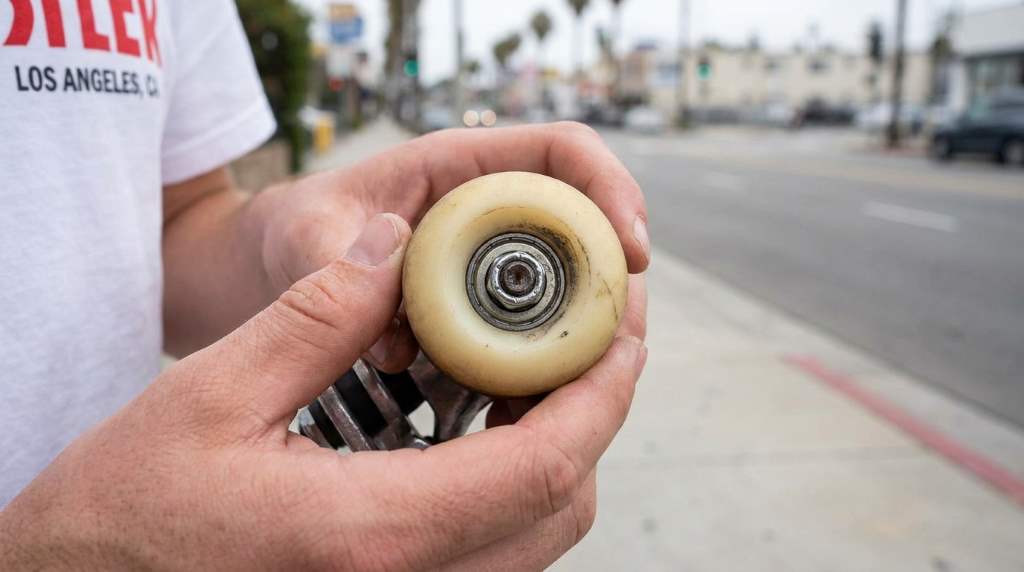
Slow skateboard wheels usually result from dirty bearings, overtightened axles, worn wheels, or rough contact surfaces. Start by checking the bearings and axle tension, then clean, lubricate, and replace damaged parts. According to industry estimates, skateboarding attracts millions of participants nationwide each year, while bearing friction can noticeably reduce rolling efficiency. Quality Bronson G3 bearings can also improve rolling performance when properly installed and maintained.
Start With a Quick Wheel Performance Check
Before replacing anything, identify exactly when your wheels slow down. Lift the skateboard and spin each wheel separately, then compare their rotation times. A healthy setup should spin smoothly without grinding, wobbling, or stopping immediately.
Next, ride slowly across a clean, level surface and listen carefully. Grinding usually indicates bearing contamination, while scraping can indicate axle or wheel interference. Meanwhile, uneven resistance often points toward wheel alignment or bearing problems.
Check whether every wheel spins at a similar speed after one firm push. If one wheel stops much sooner, inspect that corner first. This simple comparison can prevent unnecessary replacements and quickly isolate the problem.
Los Angeles conditions can complicate maintenance because dust, grit, and road debris collect around skate equipment. Beach areas can also expose components to moisture and fine sand. Therefore, riders should inspect bearings more frequently after skating near Santa Monica or Venice.
For riders who transport boards frequently, protecting equipment during travel also matters. Review these golf tees beginners guide ideas for broader gear organization inspiration. Good storage habits reduce accidental contamination before your next session.
Clean Dirty Bearings Before Buying New Wheels
Dirty bearings cause many slow-wheel problems without requiring immediate replacement. Remove the wheels and carefully inspect each bearing for dust, hair, sand, or visible corrosion. If the bearing feels gritty, cleaning should become your first repair step.
How To Remove and Clean Bearings
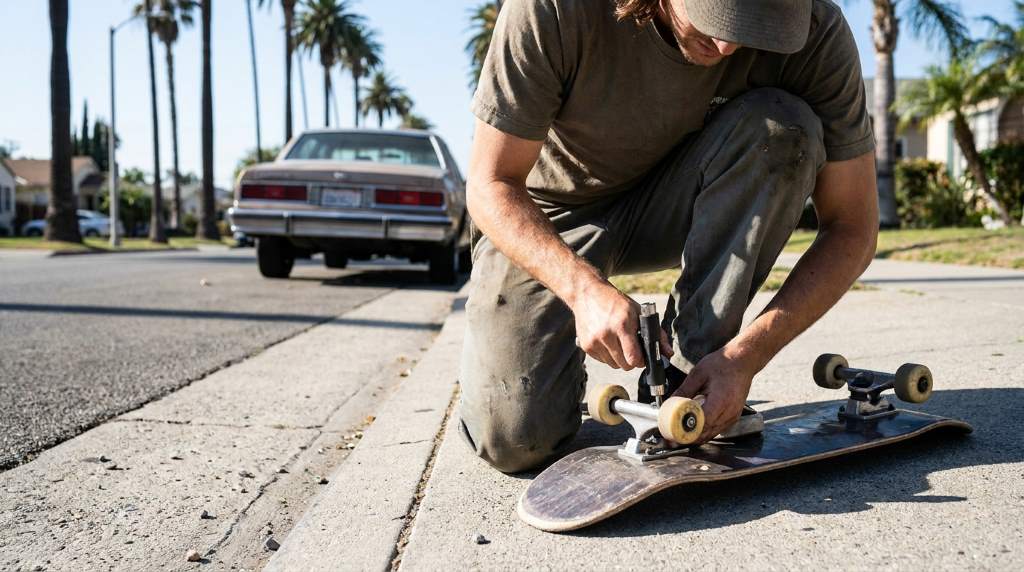
Loosen each axle nut with the correct skate tool or compatible wrench. Keep the washers and spacers together because they affect wheel alignment. Then remove each wheel without forcing the bearing against the truck.
Use a bearing removal tool when available, especially if the bearings fit tightly. Avoid prying aggressively because damaged bearing seats can affect wheel stability. Place removed bearings on a clean surface before opening their shields.
Clean removable shields according to the bearing manufacturer’s design and avoid damaging their retaining rings. Use an appropriate bearing cleaner that removes old lubricant and embedded debris. Never soak bearings in random household chemicals because residues can damage internal components.
After cleaning, allow the bearings to dry completely before adding lubricant. Apply only a small amount of skate-bearing lubricant inside each bearing. Too much lubricant attracts debris and can create additional resistance.
Spin each bearing by hand after lubrication and listen for unusual sounds. A smooth bearing should rotate without grinding or significant side-to-side movement. Replace bearings that remain rough after proper cleaning.
When Cleaning Cannot Restore Speed
Cleaning cannot repair pitted races, damaged cages, severe corrosion, or permanently worn internal surfaces. Therefore, persistent grinding usually justifies bearing replacement. Replace bearings as a complete set when several components show similar wear.
Do not judge bearing quality solely by how long a wheel spins while held in your hand. Riding performance depends on rider weight, wheel hardness, surface texture, and bearing loading. A controlled street test provides more useful information than an exaggerated free-spin test.
Check Axle Nuts, Spacers, and Wheel Alignment
Overtightened axle nuts can compress bearings and restrict wheel movement. Loosen the nut slightly, then test the wheel again without creating dangerous side-to-side movement. The wheel should spin freely while remaining properly seated on the axle.
Spacers also deserve attention because they maintain consistent bearing alignment inside the wheel. Missing or incorrectly positioned spacers can increase bearing stress during tightening. Consequently, install compatible spacers between the bearings before securing the axle nut.
Inspect the bearing seats inside each wheel for cracks or deformation. Damaged seats can prevent bearings from sitting squarely inside the wheel. Replace wheels that hold bearings loosely or visibly distort around the bearing opening.
Wheel bite can also create resistance when wheels contact the deck during turns. Check clearance by leaning the board carefully while stationary. If contact occurs, adjust setup components instead of forcing the wheels to operate under constant friction.
Riders who practice balance regularly can benefit from stronger stability habits beyond skating. These core strength balance boards techniques offer useful training concepts. Better balance can also help riders maintain smoother weight distribution during turns.
Inspect Wheel Condition and Choose the Right Hardness
Wheels lose performance when their riding surface develops flat spots, uneven wear, or embedded debris. Rotate each wheel slowly and examine its profile from several angles. A visibly uneven wheel can produce vibration and inconsistent rolling resistance.
Flat spots often develop after repeated hard braking or aggressive sliding. They create a less predictable contact pattern and can make wheels feel slower. Replace badly damaged wheels rather than trying to restore their original shape.
Match Wheel Hardness to Los Angeles Surfaces
Wheel hardness strongly affects how efficiently a skateboard moves across different surfaces. Softer wheels absorb rough pavement better but can feel less responsive during technical skating. Harder wheels roll efficiently on smooth surfaces but transmit more vibration over rough ground.
Many street riders choose medium-hard wheels for mixed urban conditions. However, the ideal hardness depends on your board, riding style, body weight, and preferred terrain. Test wheels gradually instead of assuming one specification works for every Los Angeles spot.
Rough sidewalks can create the sensation of slow wheels even when bearings work perfectly. In that situation, replacing bearings may provide little improvement. Choosing wheels suited to the pavement can produce a more noticeable difference.
Inspect wheels after sessions near construction areas because small particles can become embedded in polyurethane. Remove sharp debris carefully before it damages the riding surface. Also avoid storing boards where extreme heat can unnecessarily affect wheel materials.
Reduce Friction From Trucks and Hardware
Wheel performance depends on the entire skateboard setup, not just the wheels themselves. Inspect truck axles for burrs, corrosion, or damaged threads that could interfere with wheel movement. Replace visibly damaged hardware before continuing regular riding.
Check whether washers sit correctly between the wheel and axle nut. Improper washer placement can create unwanted friction against the bearing shield. Reassemble each wheel using the same hardware arrangement on both trucks.
Do not use excessive force when tightening axle nuts. Secure the nut firmly while preserving free wheel rotation. After tightening, spin the wheel and confirm that it does not bind under normal pressure.
Truck alignment can also affect how your board feels during rolling and turning. Inspect trucks for unusual movement, damaged bushings, or uneven mounting. Address structural issues before blaming slow wheels on bearing quality.
When carrying boards in vehicles, prevent wheels from rubbing against hard surfaces during transport. These surfboard car rack trucks considerations highlight useful transport principles. Secure equipment properly and keep wheels away from abrasive surfaces.
Use a Simple Los Angeles Wheel Maintenance Routine
A maintenance routine prevents minor contamination from becoming an expensive equipment problem. Inspect wheels after riding through dusty streets, damp areas, or heavily trafficked paths. Clean visible debris before placing the skateboard into storage.
Wipe wheels with a dry or slightly damp cloth after each demanding session. Avoid flooding the bearings with water because moisture can encourage corrosion. If the board becomes wet, dry the entire setup promptly before storage.
Every few sessions, spin each wheel and compare resistance between all four corners. Listen for clicking, grinding, or inconsistent rotation during this inspection. Early detection usually costs less than replacing multiple damaged components later.
Los Angeles-Specific Maintenance Habits
Riders near the coast should pay extra attention to moisture and fine sand. Coastal air can contribute to corrosion when equipment remains exposed for long periods. Store the skateboard indoors in a dry location after every session.
Urban riders should also watch for construction dust and roadside debris. These particles can enter bearing shields and gradually increase friction. Therefore, avoid leaving your board uncovered inside dusty garages or vehicle trunks.
Heat exposure deserves attention during Southern California summers. Do not leave a skateboard inside a hot vehicle for extended periods. Excessive heat can affect adhesives, lubricants, and some equipment materials over time.
When You Should Replace the Wheels or Bearings
Replace bearings when cleaning fails to remove grinding, rough rotation, or significant play. Replace wheels when flat spots, cracks, severe wear, or damaged bearing seats affect performance. These repairs usually make more sense than repeatedly adjusting a failing component.
Replace only the affected part when the rest of the setup remains healthy. However, matching all four wheels generally provides more consistent handling. Similarly, replacing bearings as a complete set creates more predictable rolling characteristics.
Do not replace quality components simply because another rider recommends a particular setup. Your surface, riding style, wheel size, and maintenance habits determine actual performance. Test changes systematically so you know which adjustment created the improvement.
A Practical Five-Minute Slow-Wheel Troubleshooting Sequence
Follow the same sequence whenever your skateboard suddenly feels slower. A consistent diagnostic process reduces guesswork and helps identify the actual source of resistance.
- Step 1: Spin every wheel and identify the slowest corner.
- Step 2: Check axle nut tension and wheel side play.
- Step 3: Inspect bearings for dirt, grinding, corrosion, or damage.
- Step 4: Examine wheel surfaces for flat spots, cracks, and uneven wear.
- Step 5: Clean and lubricate serviceable bearings before testing again.
- Step 6: Replace damaged bearings, wheels, spacers, or hardware when necessary.
- Step 7: Test the skateboard on the same surface before comparing performance.
Testing under similar conditions makes your results much more reliable. For example, compare performance on the same pavement after identical maintenance. This approach separates equipment problems from differences caused by terrain.
Common Mistakes That Keep Wheels Slow
One common mistake involves adding excessive lubricant to compensate for dirty bearings. Lubricant cannot remove abrasive particles that remain inside contaminated bearing races. Clean first, then lubricate sparingly.
Another mistake involves tightening axle nuts until wheels barely move sideways. Some riders assume maximum tightness improves safety, but excessive compression can restrict bearing movement. Set the nut securely while preserving smooth rotation.
Riders also sometimes blame bearings when worn wheels create the real problem. Examine both components before purchasing replacements. A fresh bearing cannot correct a severely flat-spotted wheel.
Finally, avoid comparing your setup with free-spin demonstrations online. Those demonstrations rarely replicate actual riding conditions. Evaluate acceleration, rolling distance, stability, and vibration during normal sessions instead.
Conclusion: Get Your Wheels Rolling Smoothly Again
Fixing slow skateboard wheels usually starts with diagnosis rather than immediate replacement. Clean contaminated bearings, correct axle tension, inspect spacers, and evaluate wheel condition carefully. Then match your wheel setup to the surfaces you ride most frequently.
If cleaning fails, replace damaged bearings or worn wheels instead of forcing defective components to continue working. After repairs, test the skateboard under consistent riding conditions. Take action today by inspecting every wheel and correcting the first clear source of resistance.
FAQs
Why are my skateboard wheels spinning slowly?
Dirty bearings, overtightened axle nuts, worn wheels, or damaged spacers commonly cause slow skateboard wheels.
Can dirty bearings make wheels feel slow?
Yes, dirt and grit increase internal friction and can significantly reduce smooth bearing performance.
How tight should skateboard wheel nuts be?
Tighten them securely while allowing the wheel to spin freely without excessive side-to-side movement.
Should I replace wheels or bearings first?
Inspect both components first, then replace whichever component shows clear damage or excessive wear.
Do harder wheels roll faster on Los Angeles streets?
Harder wheels can roll efficiently on smooth pavement, while softer wheels often handle rough surfaces better.